Ah! Vanitas vanitatum! Which of us is happy in this world? Which of us has his desire? or, having it, is satisfied?—Come, children, let us shut up the box and the puppets, for our play is played out.
About This Quote
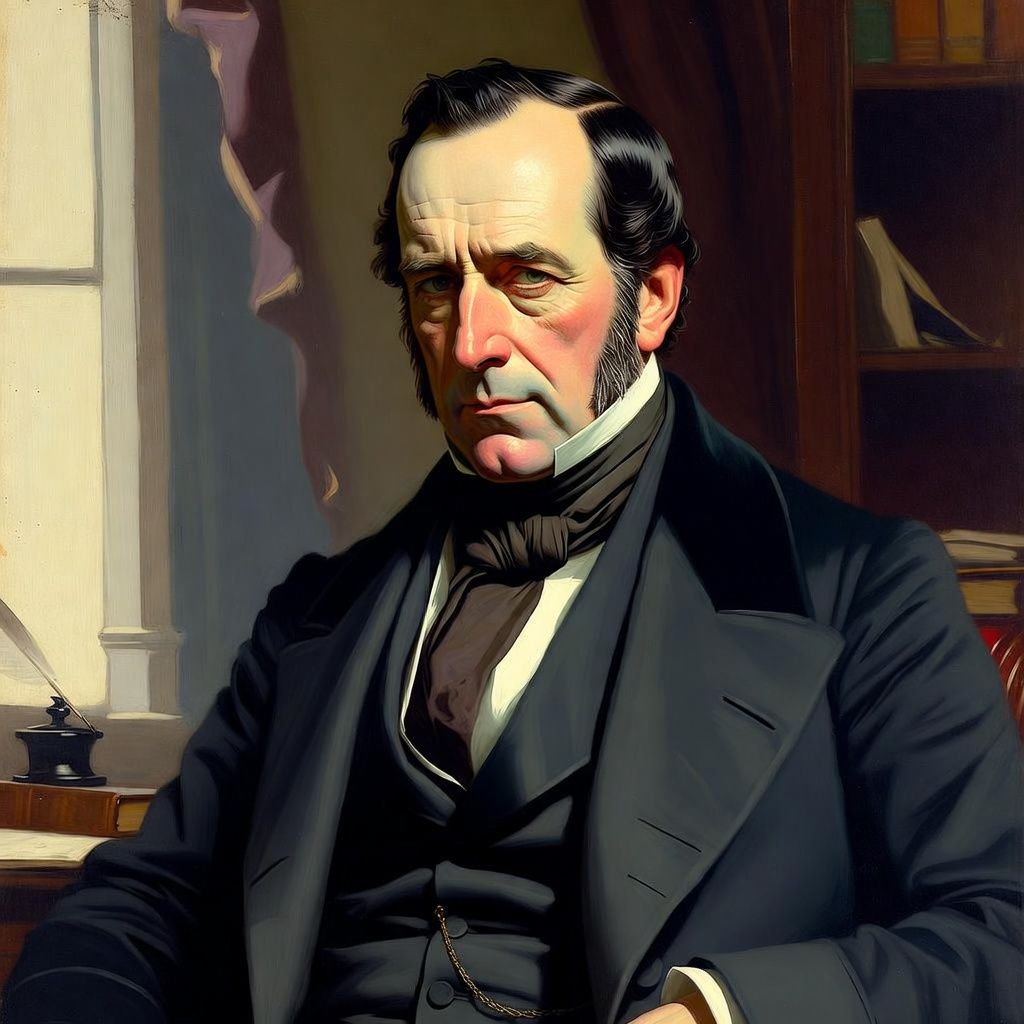
This line comes from the closing “conclusion” of William Makepeace Thackeray’s novel *Vanity Fair* (1847–1848), a work subtitled “A Novel without a Hero.” Throughout the book Thackeray repeatedly frames society as a puppet-show—characters striving, scheming, and suffering for status, money, and admiration. At the end, after the fates of Becky Sharp, Amelia Sedley, and others have played out without any tidy moral triumph, the narrator steps forward to dismiss the spectacle. The Latin biblical refrain “*Vanitas vanitatum*” (“vanity of vanities,” from Ecclesiastes) underscores the novel’s satiric view of worldly ambition and the emptiness of social pretensions.
Interpretation
The narrator’s exclamation turns the novel’s social comedy into a moral meditation. “Vanity of vanities” suggests that human striving—especially for reputation, wealth, and romantic fulfillment—proves transient and ultimately unsatisfying. The rhetorical questions (“Which of us is happy…? Which of us has his desire? or, having it, is satisfied?”) broaden the satire beyond the characters to the reader’s own life, implying that desire is either unmet or, once met, quickly loses its power to content. The puppet-show image (“shut up the box and the puppets”) emphasizes artifice: society is performance, and the novel itself is a staged entertainment that ends, leaving behind a sobering recognition of life’s impermanence and the limits of worldly success.
Source
William Makepeace Thackeray, *Vanity Fair: A Novel Without a Hero* (final chapter/closing lines; originally serialized 1847–1848).