
Blow out, you bugles, over the rich dead!
There’s none of these so lonely and poor of old,
But, dying, has made us rarer gifts than gold.
There’s none of these so lonely and poor of old,
But, dying, has made us rarer gifts than gold.
About This Quote
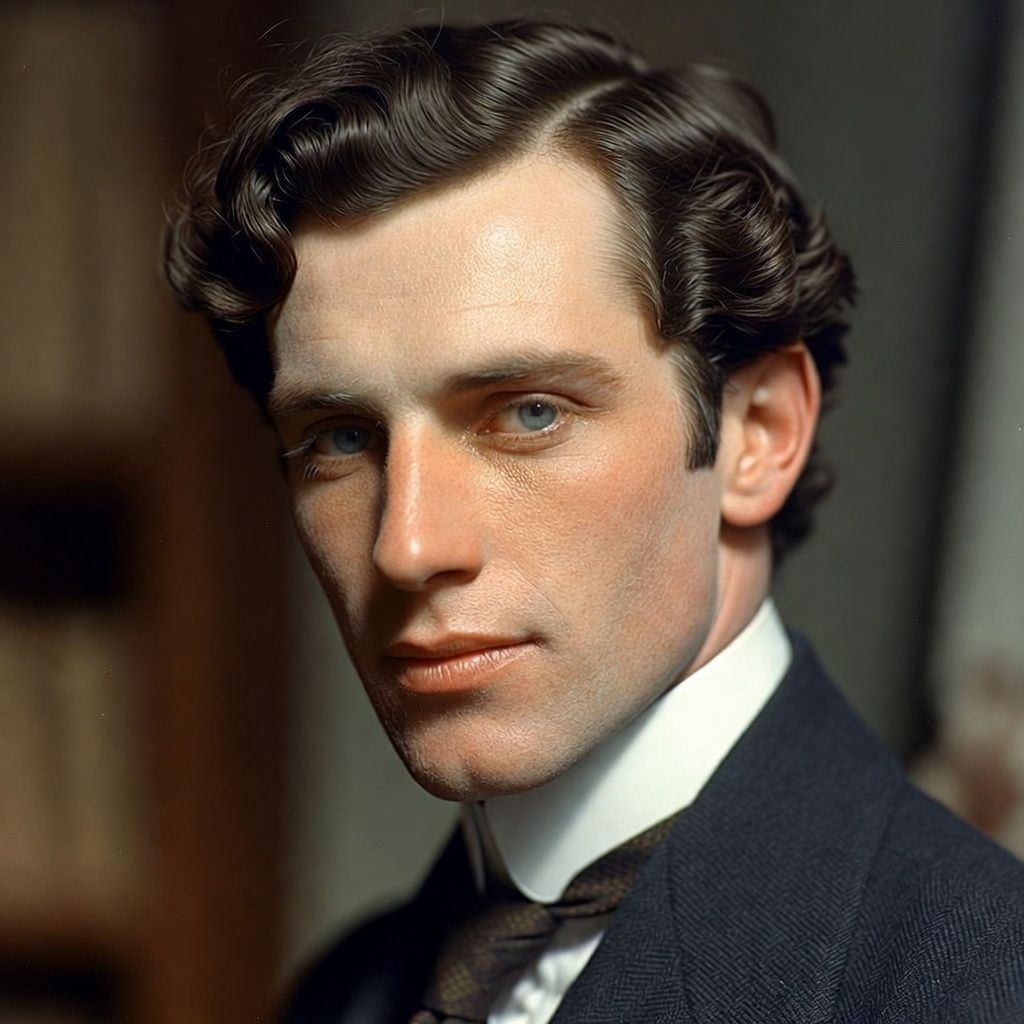
These lines come from Rupert Brooke’s sonnet “The Dead,” written in the first months of the First World War and published in 1914 as part of his sequence “1914” (also known as “War Sonnets”). Brooke, a prominent young Georgian poet, became an emblematic voice of early-war idealism in Britain, before the prolonged trench slaughter reshaped public feeling. The poem adopts a ceremonial, almost liturgical tone—“bugles” evoke military funerals and public commemoration—casting the fallen as “rich” not in money but in the moral and spiritual value their deaths confer upon the living nation. Brooke himself died in 1915 en route to Gallipoli.
Interpretation
The passage transforms death in war into a kind of transfiguring gift. The imperative “Blow out, you bugles” calls for public honor, while “rich dead” reverses expectations: the dead possess a wealth the living lack. Brooke suggests that even those who were “lonely and poor” in life become, through sacrifice, bearers of “rarer gifts than gold”—courage, unity, meaning, and a heightened sense of national or communal value. The rhetoric elevates loss into collective enrichment, typical of early WWI patriotic verse. Read later, the poem can also be seen as revealing how language and ceremony can aestheticize and justify mass death.
Source
Rupert Brooke, “The Dead” (sonnet), in 1914 and Other Poems (London: Sidgwick & Jackson, 1915).
