The essence of philosophy is that a man should so live that his happiness shall depend as little as possible on external things.
About This Quote

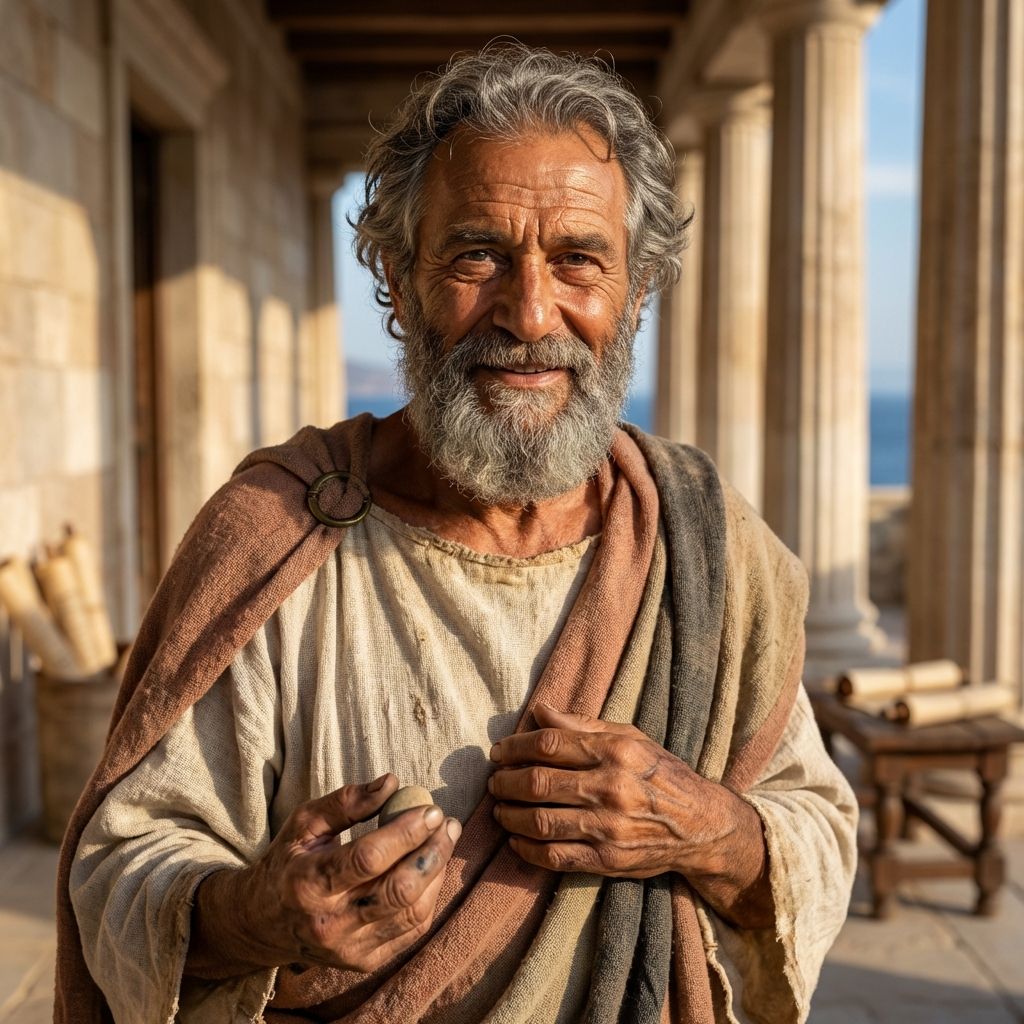
Epictetus (c. 50–135 CE), a former slave turned Stoic teacher, taught in Nicopolis in northwestern Greece after being expelled from Rome with other philosophers under Domitian. His teachings survive mainly through notes taken by his student Arrian, especially the Discourses and the Enchiridion (Handbook). The sentiment in this quotation reflects the core Stoic program Epictetus repeatedly urged: train yourself to distinguish what is “up to us” (judgments, choices, character) from what is not (health, wealth, reputation, other people’s actions), and build a life whose tranquility is secured by inner discipline rather than fortune’s changes.
Interpretation
The line condenses a Stoic definition of philosophy as a practical art of living, not a purely theoretical pursuit. “Happiness” here means eudaimonia—flourishing or well-being grounded in virtue and right use of impressions—rather than pleasure or comfort. To depend “as little as possible on external things” is not to reject the world, but to refuse to make one’s peace contingent on what cannot be controlled. The quote emphasizes resilience: when your good is located in your own reasoned choices, losses and reversals may hurt, but they cannot destroy your freedom or integrity.