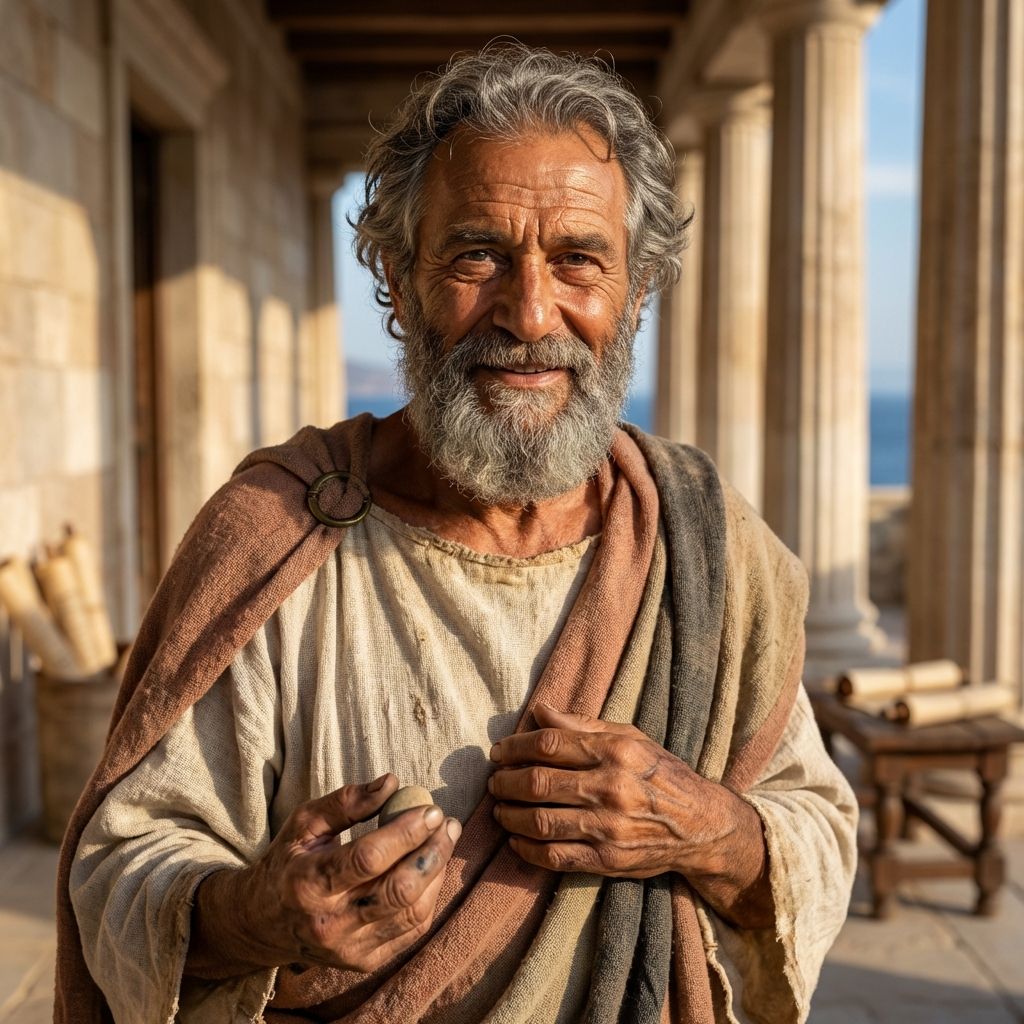
Wealth consists not in having great possessions, but in having few wants.
About This Quote

Epictetus (c. 50–135 CE), a former slave turned Stoic teacher, emphasized that freedom and happiness depend on mastering one’s desires rather than accumulating externals. This maxim reflects a common Stoic theme: “wealth” is a moral and psychological condition, not a financial one. The saying is widely attributed to Epictetus in later quotation traditions, but in surviving ancient sources his teachings come to us indirectly—recorded by his student Arrian in the Discourses and the Enchiridion—so many popular formulations circulate as paraphrases rather than verbatim lines.
Interpretation
The quote redefines wealth as sufficiency: the person who needs little is “rich” because they are not dependent on fortune, status, or constant acquisition. In Stoic terms, possessions are “externals” and cannot guarantee tranquility; what can be governed is one’s judgments and appetites. By reducing wants, one reduces vulnerability to loss, envy, and anxiety, gaining a kind of inner autonomy. The aphorism also critiques consumerist measures of success, suggesting that contentment and self-command are more stable indicators of prosperity than the size of one’s holdings.
Variations
1) “Wealth consists not in having great possessions, but in having few wants.”
2) “It is not the man who has too little, but the man who craves more, that is poor.”
3) “If you wish to be rich, do not add to your money but subtract from your desire.”