For what avail the plough or sail, or land or life, if freedom fail?
About This Quote
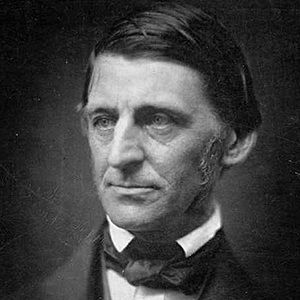
This line is from Ralph Waldo Emerson’s poem “Boston Hymn,” written for and first delivered at a public celebration in Boston marking President Abraham Lincoln’s Emancipation Proclamation. Emerson, long associated with New England abolitionism, composed the hymn as a civic-religious meditation on the moral meaning of emancipation and the Civil War. The poem frames national prosperity—agriculture (“plough”), commerce (“sail”), property (“land”), even existence (“life”)—as hollow without liberty, aligning Emerson’s transcendental moral idealism with the immediate political crisis of slavery and freedom in the United States.
Interpretation
Emerson compresses an argument about values into a single rhetorical question: material productivity and national expansion are worthless if they are purchased at the cost of human freedom. The paired images of plough and sail evoke the economic engines of a growing nation, while “land or life” broadens the claim to property and survival itself. By making freedom the condition that gives meaning to all other goods, the line turns emancipation from a policy choice into a moral absolute. Its cadence and internal rhyme give it the force of a maxim, suited to public recitation and collective conscience.
Source
Ralph Waldo Emerson, “Boston Hymn” (written for the Emancipation Proclamation celebration; first read at the Music Hall, Boston, 1 January 1863).