He who desires but acts not, breeds pestilence.
About This Quote
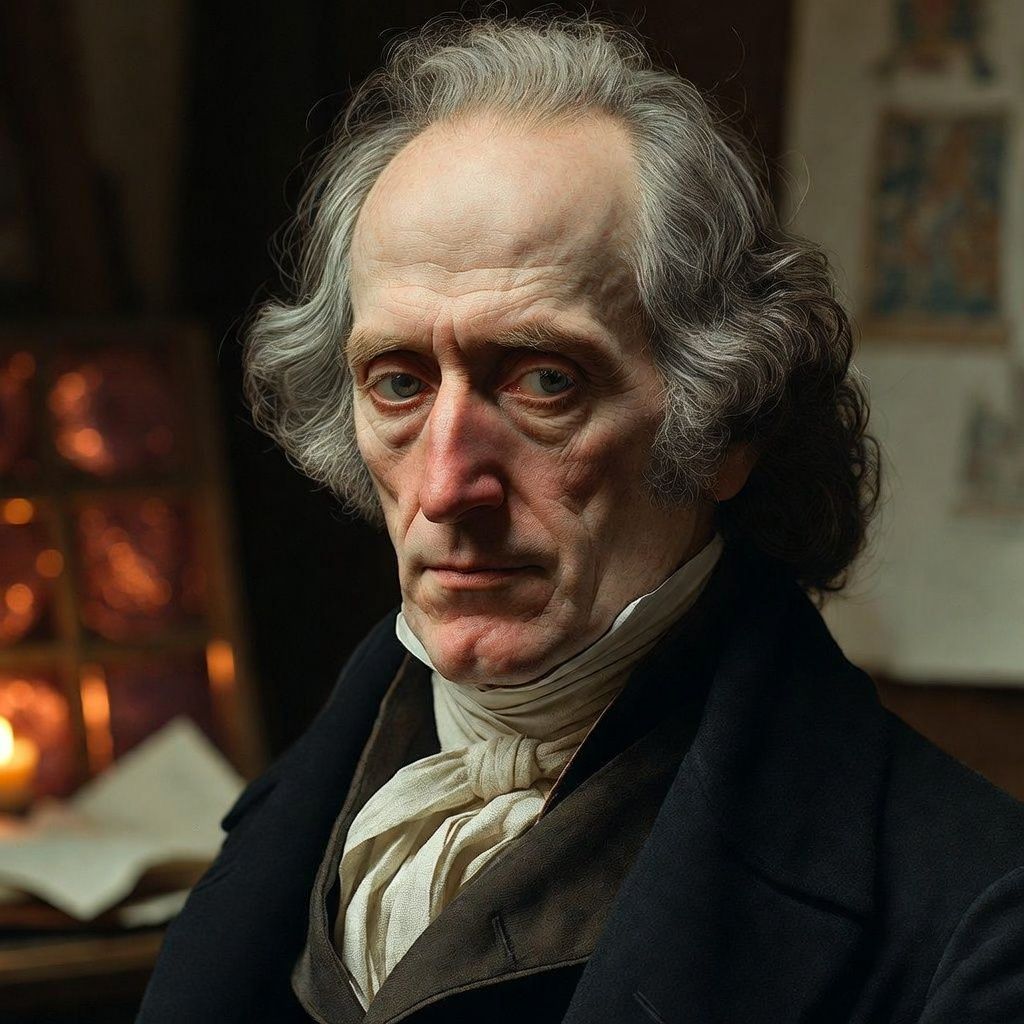
The line is attributed to William Blake and is commonly cited as one of his gnomic “Proverbs of Hell,” a sequence of aphorisms embedded in his illuminated book *The Marriage of Heaven and Hell* (composed c. 1790–1793). In that work Blake adopts a deliberately paradoxical, anti-conventional voice to attack moral complacency and what he saw as the deadening effects of repression—religious, social, and psychological. The “Proverbs” are framed as insights from the energetic, insurgent side of human nature (“Hell” as creative energy), meant to shock readers out of passive virtue and into imaginative, embodied life.
Interpretation
Blake links unacted desire to corruption: wanting without doing turns vital energy inward until it becomes toxic. “Pestilence” suggests not only personal sickness (resentment, frustration, self-loathing) but also social contagion—stagnant longing that breeds hypocrisy, cruelty, or moralizing against others. In Blake’s symbolic system, desire is a form of life-force; when it is denied expression, it does not disappear but festers. The proverb thus champions creative and ethical agency: to desire is human, but to refuse action is to let desire decay into something destructive.
Source
William Blake, *The Marriage of Heaven and Hell* (1790–1793), “Proverbs of Hell.”