Exuberance is beauty.
About This Quote
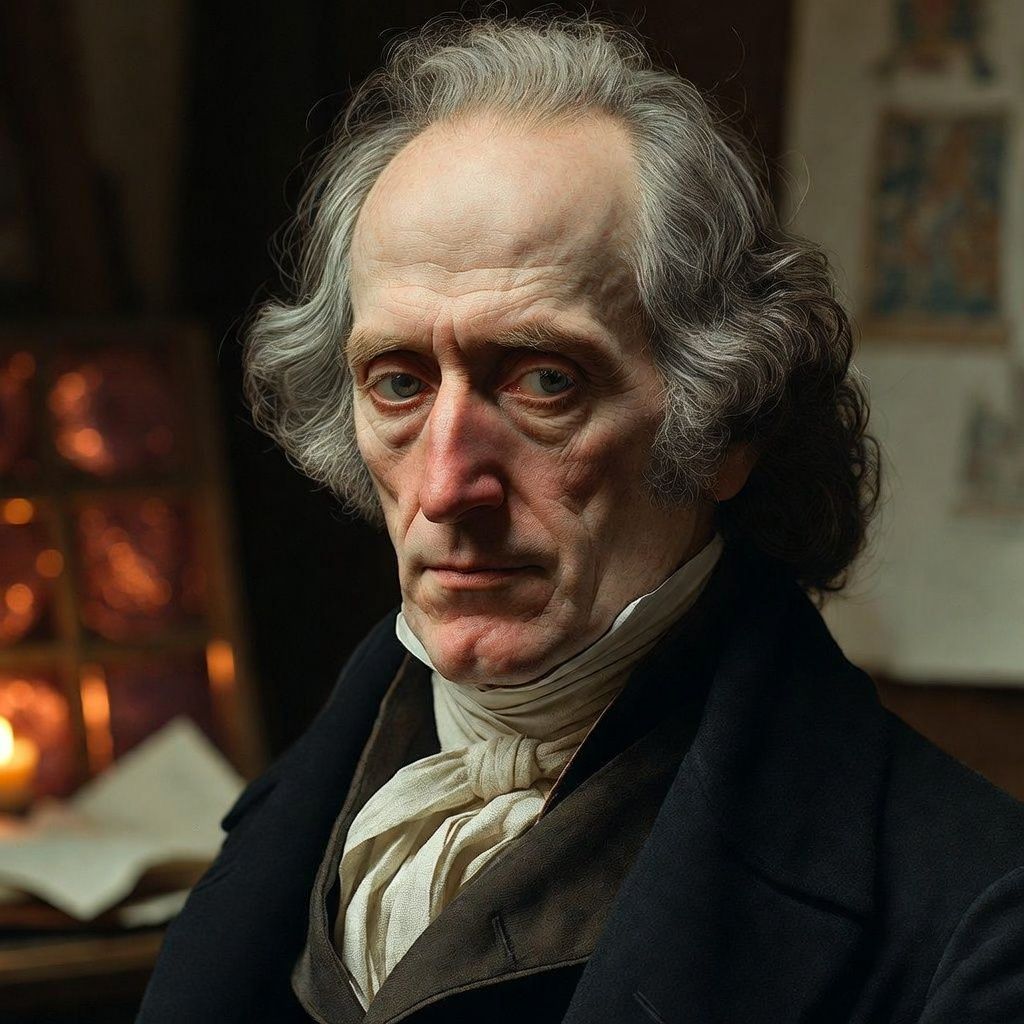
“Exuberance is Beauty” is one of William Blake’s aphoristic “Proverbs of Hell,” composed in the early 1790s and published in his illuminated book *The Marriage of Heaven and Hell* (c. 1790–1793). The work was written in the aftermath of the American and French Revolutions, when Blake was intensely engaged with questions of political liberty, religious authority, and the moral psychology of repression. In the “Proverbs,” Blake adopts a deliberately paradoxical, anti-prudential voice—associating energy, desire, and imaginative excess with truth, while treating conventional restraint as spiritually deadening. The line encapsulates Blake’s broader Romantic-era challenge to neoclassical ideals of order and decorum.
Interpretation
Blake’s proverb asserts that beauty is not primarily a matter of symmetry, polish, or controlled refinement, but of vital energy—overflowing life, intensity, and imaginative force. “Exuberance” implies abundance and uncontained motion; by equating it with beauty, Blake overturns moral and aesthetic systems that prize moderation and self-denial. The statement also aligns with his recurring opposition between “Energy” and “Reason”: what institutions label excessive or unruly may be precisely what makes art, nature, and human experience radiant. Read ethically, the line suggests that a fully lived life—one that risks passion and creative excess—possesses its own kind of splendor.
Source
William Blake, *The Marriage of Heaven and Hell* (c. 1790–1793), “Proverbs of Hell.”