History will absolve me.
About This Quote
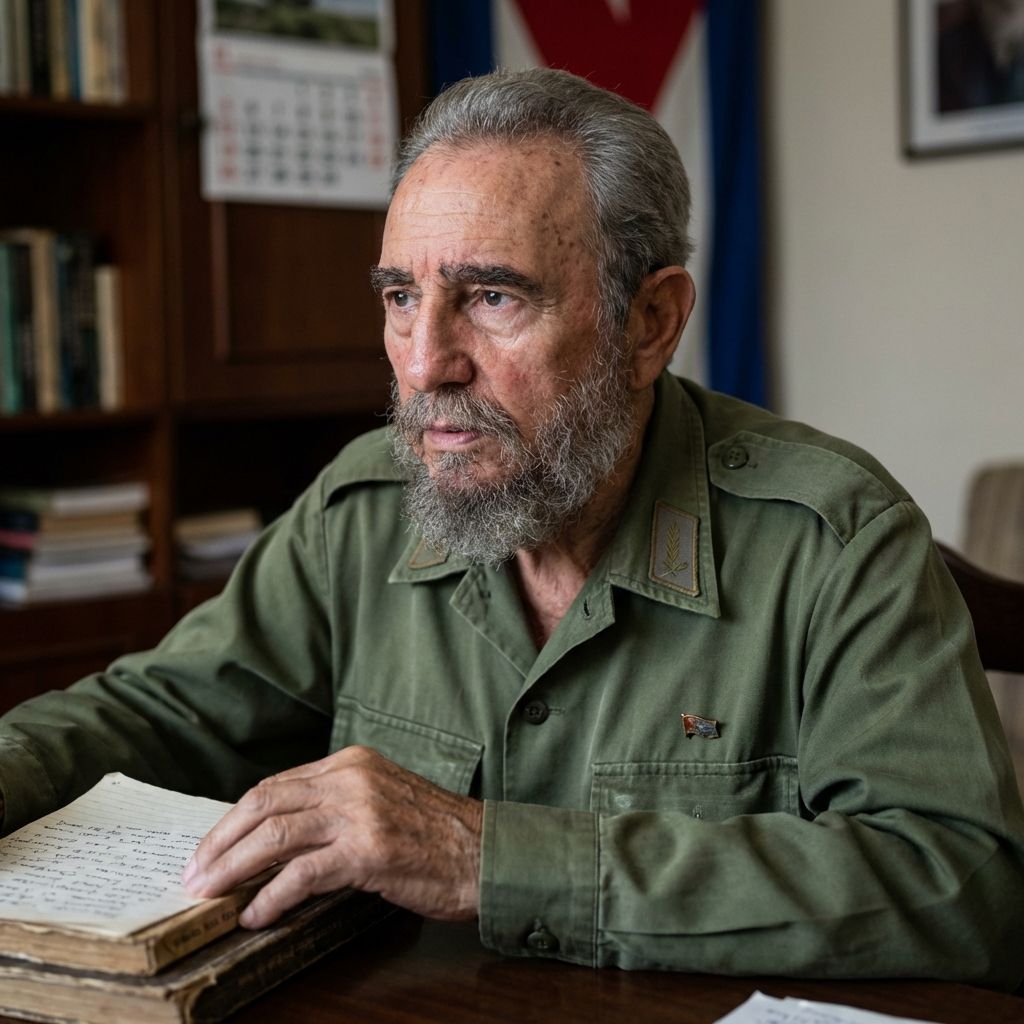
Castro’s line is associated with his 1953 courtroom defense after the failed Moncada Barracks attack (July 26, 1953), an early action of the Cuban revolutionary movement against Fulgencio Batista’s regime. Arrested and tried, Castro used the proceedings as a political platform, delivering a lengthy speech that was later circulated as a pamphlet under the title “La historia me absolverá” (“History Will Absolve Me”). The phrase functions as a closing claim that even if the court condemns him, a future historical judgment—shaped by the revolution’s aims and outcomes—will vindicate his actions and motives.
Interpretation
“History will absolve me” asserts a higher court than the immediate legal one: the tribunal of posterity. Castro frames his rebellion as morally and politically justified even if it is criminalized by the state. The statement also works rhetorically to convert personal peril into prophetic certainty—casting the speaker as an agent of historical necessity and aligning his cause with the long arc of national liberation. In revolutionary discourse, such an appeal seeks to delegitimize present authority and to pre-empt criticism by claiming that outcomes (social justice, sovereignty, reform) will retroactively validate the means.
Variations
Spanish original: “La historia me absolverá.”
Source
Fidel Castro, courtroom defense speech later published as “La historia me absolverá” (“History Will Absolve Me”), delivered during his trial following the Moncada Barracks attack (Santiago de Cuba, 1953).