Indeed, it has been said that democracy is the worst form of Government except all those others that have been tried from time to time.
About This Quote
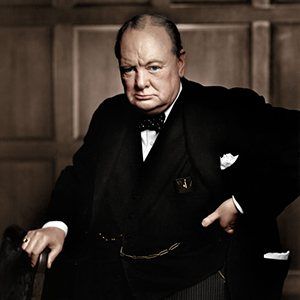
Churchill delivered this remark in the House of Commons during a debate on electoral reform in the closing months of World War II. Speaking as Prime Minister, he was defending democratic institutions and the conduct of elections against criticism, while acknowledging democracy’s frustrations and imperfections. The line is framed as a wry concession—“it has been said”—used to reinforce the argument that, despite its flaws, parliamentary democracy remains preferable to the alternative systems Britain had confronted in the first half of the 20th century. The statement’s timing (1947 in the postwar Parliament) also reflects Britain’s effort to reaffirm democratic legitimacy after the wartime coalition and amid ideological competition with totalitarian models.
Interpretation
The aphorism balances realism with commitment. Churchill concedes that democracy can be inefficient, contentious, and prone to error—“the worst form”—but insists its defects are outweighed by the failures of every other system “tried from time to time.” The force of the line lies in its comparative logic: democracy is not idealized as perfect, but defended as the least bad option because it allows peaceful correction through elections, public debate, and accountable government. The phrasing also functions rhetorically to disarm critics: by admitting democracy’s shortcomings first, Churchill strengthens the credibility of his ultimate endorsement of democratic governance.
Source
Winston S. Churchill, speech in the House of Commons, 11 November 1947 (Hansard), in debate on electoral reform.