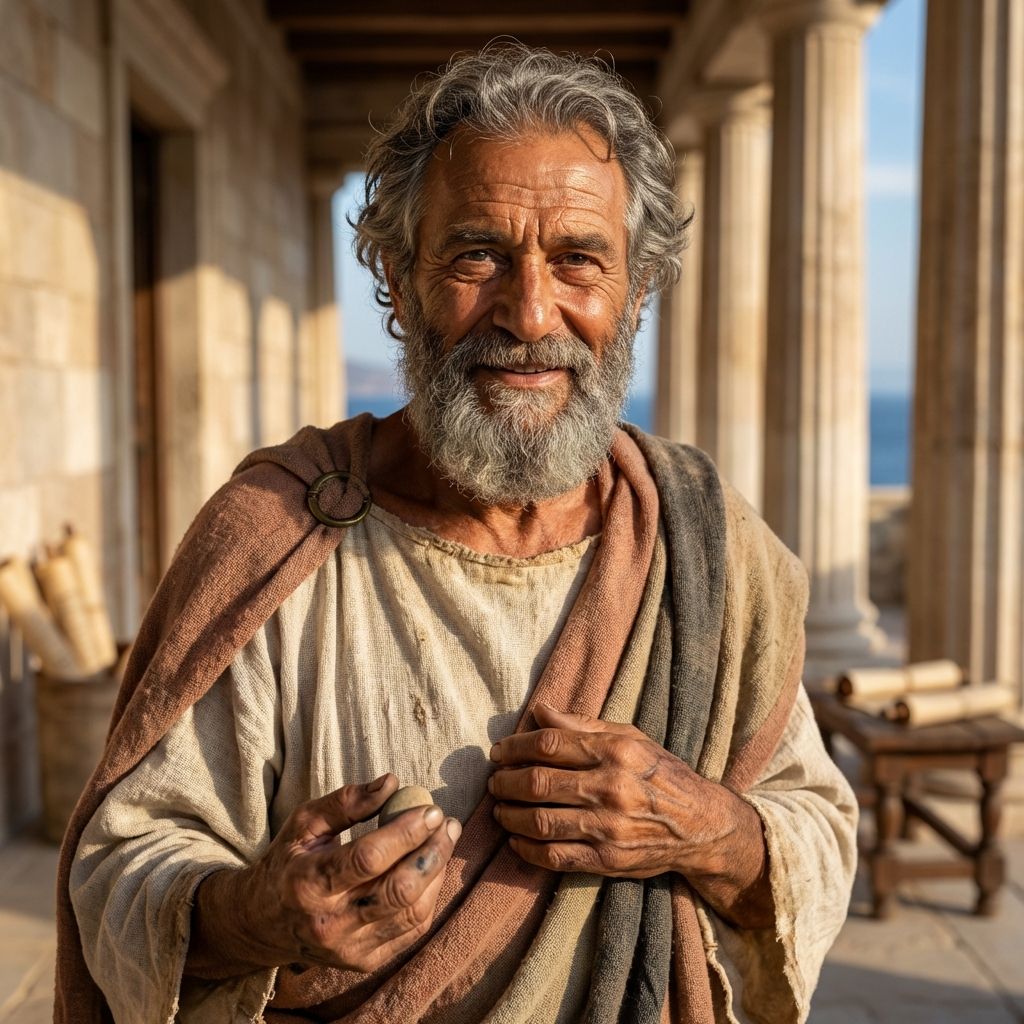
“Life is trouble,” Zorba continued. “Death, no. To live—do you know what that means? To undo your belt and look for trouble!”
About This Quote

The line is spoken by Alexis Zorba in Nikos Kazantzakis’s novel *Zorba the Greek* (originally published in Greek as *Víos kai Politeía tou Aléxi Zorbá*). Zorba, a larger-than-life laborer and self-taught philosopher, is in conversation with the book’s narrator—an introspective intellectual often called “the Boss.” Throughout the novel, Zorba repeatedly challenges the narrator’s cautious, bookish approach to existence, urging him toward risk, appetite, and direct experience. This remark comes in the course of Zorba’s characteristic exhortations: life is inherently difficult and demands boldness, while death is a kind of release from struggle.
Interpretation
Zorba’s aphorism frames life not as comfort or stability but as continual confrontation with hardship, uncertainty, and desire. “Death, no” suggests that only the living must wrestle with fear, responsibility, and longing; death ends the contest. The vivid image of undoing one’s belt implies loosening restraint—abandoning prudence, propriety, and self-protection—to meet life on its own terms. In the novel’s larger moral drama, the quote crystallizes Zorba’s existential ethic: authenticity is earned through action, risk, and wholehearted engagement, not through contemplation alone. It is both a provocation and a definition of vitality: to live is to choose struggle over safety.
Variations
1) “Life is trouble. Only death is not. To be alive is to undo your belt and look for trouble.”
2) “Life is trouble… Death isn’t. To live—do you know what that means? To unfasten your belt and go looking for trouble!”
3) “Life is trouble; death, no. To live means to loosen your belt and seek trouble.”
Source
Nikos Kazantzakis, *Zorba the Greek* (Greek: *Víos kai Politeía tou Aléxi Zorbá*), in dialogue attributed to Zorba.