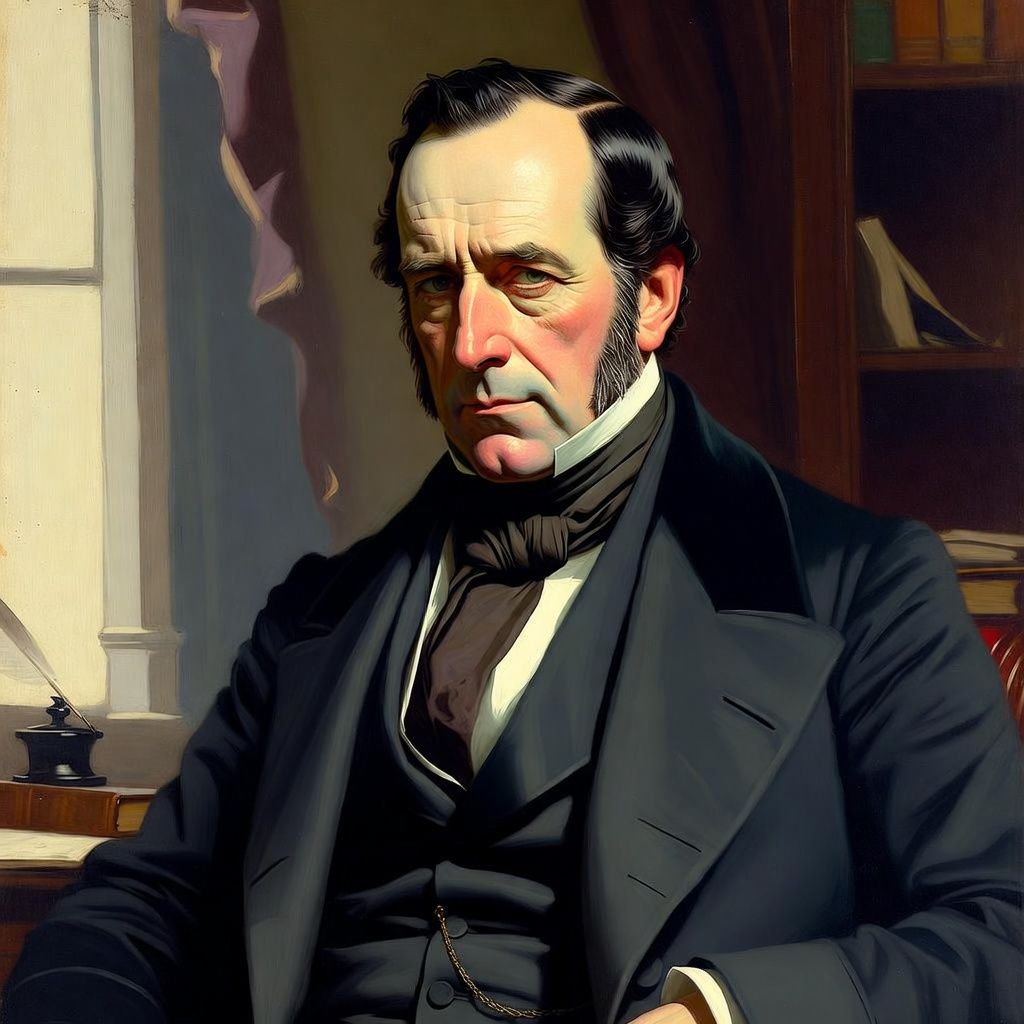
Oh, what a tangled web we weave,
When first we practice to deceive!
About This Quote

Sir Walter Scott’s couplet comes from his narrative poem "Marmion" (1808), a verse romance set against the Anglo-Scottish conflict culminating in the Battle of Flodden (1513). In Canto VI, Scott pauses the story to deliver a moral reflection on deception: once a person tells a lie, they are often forced into further lies and complications to sustain it. The line quickly escaped its original literary setting and became a widely quoted proverb in English, frequently invoked in political, legal, and personal contexts to warn that dishonesty tends to multiply and entrap the deceiver.
Interpretation
The image of a “tangled web” suggests both intricacy and entrapment: deception is not a single act but a structure that grows as it is maintained. “When first we practice to deceive” emphasizes the initiating moment—once the habit begins, consequences follow almost mechanically, as each lie requires another to cover it. Scott’s phrasing also implies self-inflicted harm: the deceiver becomes caught in their own construction. The couplet’s enduring force lies in its memorable metaphor and its psychological insight into how dishonesty escalates, turning a short-term advantage into long-term complication and exposure.
Variations
1) "O what a tangled web we weave / When first we practise to deceive." 2) "What a tangled web we weave, when first we practice to deceive." 3) "Oh, what a tangled web we weave, when first we practise to deceive."
Source
Walter Scott, "Marmion: A Tale of Flodden Field" (1808), Canto VI, stanza 17.