Someone is always at my elbow reminding me that I am the granddaughter of slaves. It fails to register depression with me. Slavery is sixty years in the past. The operation was successful and the patient is doing well, thank you.
About This Quote
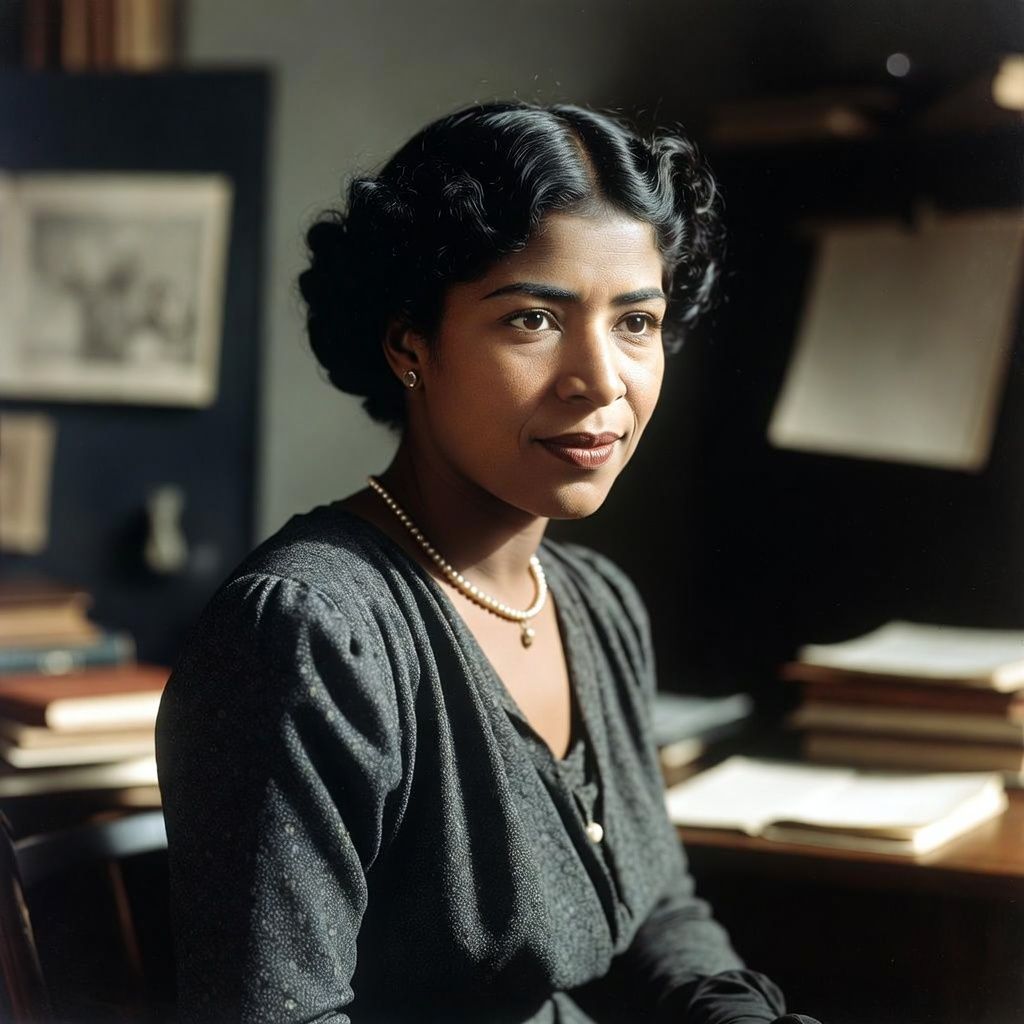
Hurston wrote this line in the mid-1920s, during the Harlem Renaissance, when Black writers were publicly debating how to represent racial history, oppression, and “racial pride” to largely white publishing institutions. In an autobiographical essay, she describes growing up in Eatonville, Florida—an all-Black town where she did not experience herself primarily through the lens of white racism until later encounters outside it. The remark responds to expectations that she should present herself as burdened by slavery’s legacy; instead she insists on her own emotional independence and forward-looking self-conception, using brisk, almost clinical humor to reject a prescribed posture of grievance.
Interpretation
The quote is a defiant refusal to let inherited trauma dictate personal identity. Hurston acknowledges slavery as historical fact but rejects the idea that it must automatically produce “depression” in her. The medical metaphor—“The operation was successful and the patient is doing well”—casts emancipation as a completed procedure and the present as recovery, emphasizing vitality over victimhood. At the same time, the line is provocative: it can be read as challenging both white condescension and Black uplift narratives that demanded certain emotional performances. Its significance lies in Hurston’s insistence on agency in self-definition, even when that stance risks being misread as minimizing ongoing racism.
Source
Zora Neale Hurston, “How It Feels to Be Colored Me,” The World Tomorrow (May 1928).