All things bright and beautiful,
All creatures great and small,
All things wise and wonderful,
The Lord God made them all.
About This Quote
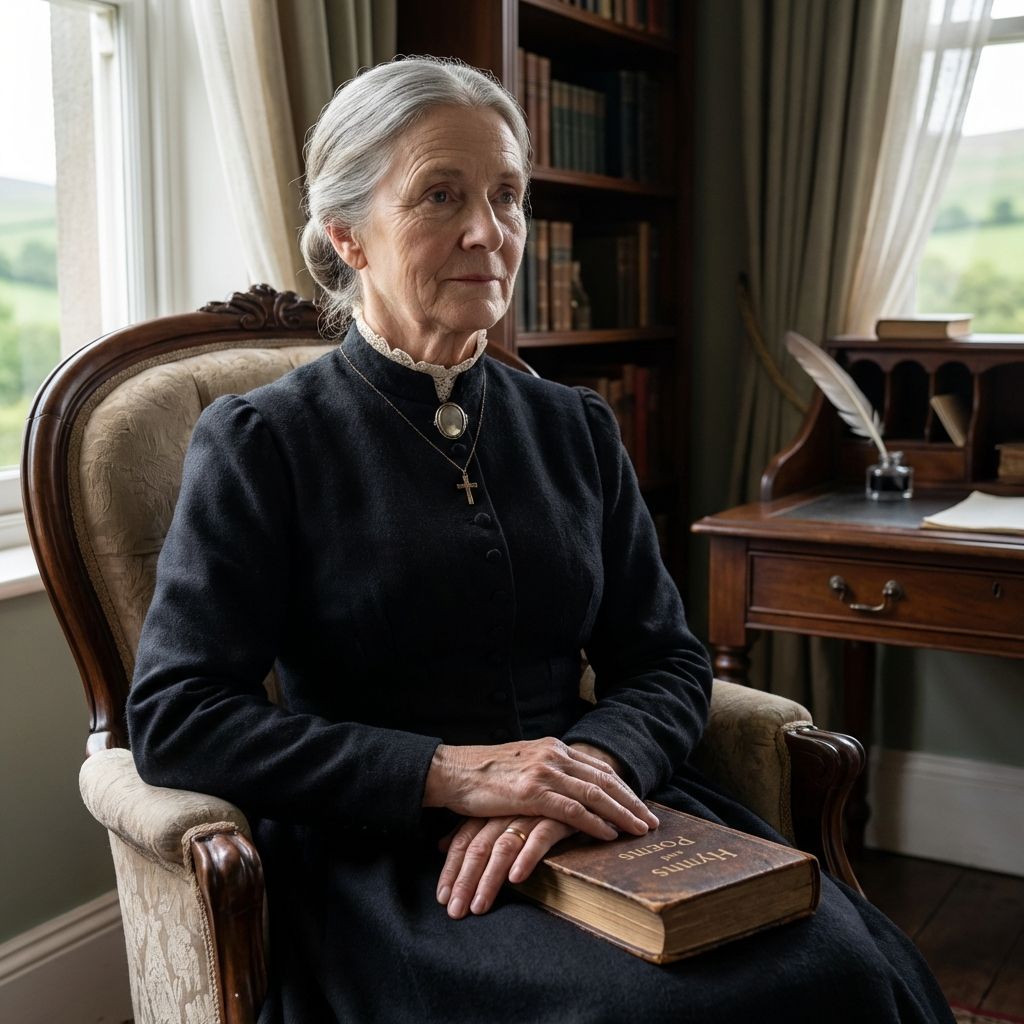
These lines are the opening stanza of the Anglican hymn “All Things Bright and Beautiful” by the Irish hymnwriter Cecil Frances Alexander (1818–1895). The hymn was written for children as part of her project of pairing hymns with the Apostles’ Creed and catechetical teaching, emphasizing God as Creator. It was first published in her collection Hymns for Little Children (1848), intended for use in home and church instruction. The hymn’s simple catalog of the natural world reflects Victorian-era devotional poetry and a didactic aim: to cultivate wonder, gratitude, and orthodox belief through memorable verse.
Interpretation
The stanza compresses a theology of creation into a child-friendly refrain. By grouping “bright and beautiful,” “great and small,” and “wise and wonderful,” it asserts that the full range of nature—splendor and minuteness, power and delicacy, apparent order and mystery—belongs to a single divine origin. The repeated “All” functions rhetorically as a universal claim: nothing in the created world lies outside God’s making. The effect is both devotional and ethical, inviting reverence for creation and humility before its Maker, while also training the memory through parallelism and cadence typical of congregational hymnody.
Source
Cecil Frances Alexander, “All Things Bright and Beautiful,” in Hymns for Little Children (Dublin: W. Curry, Jun. and Company, 1848).