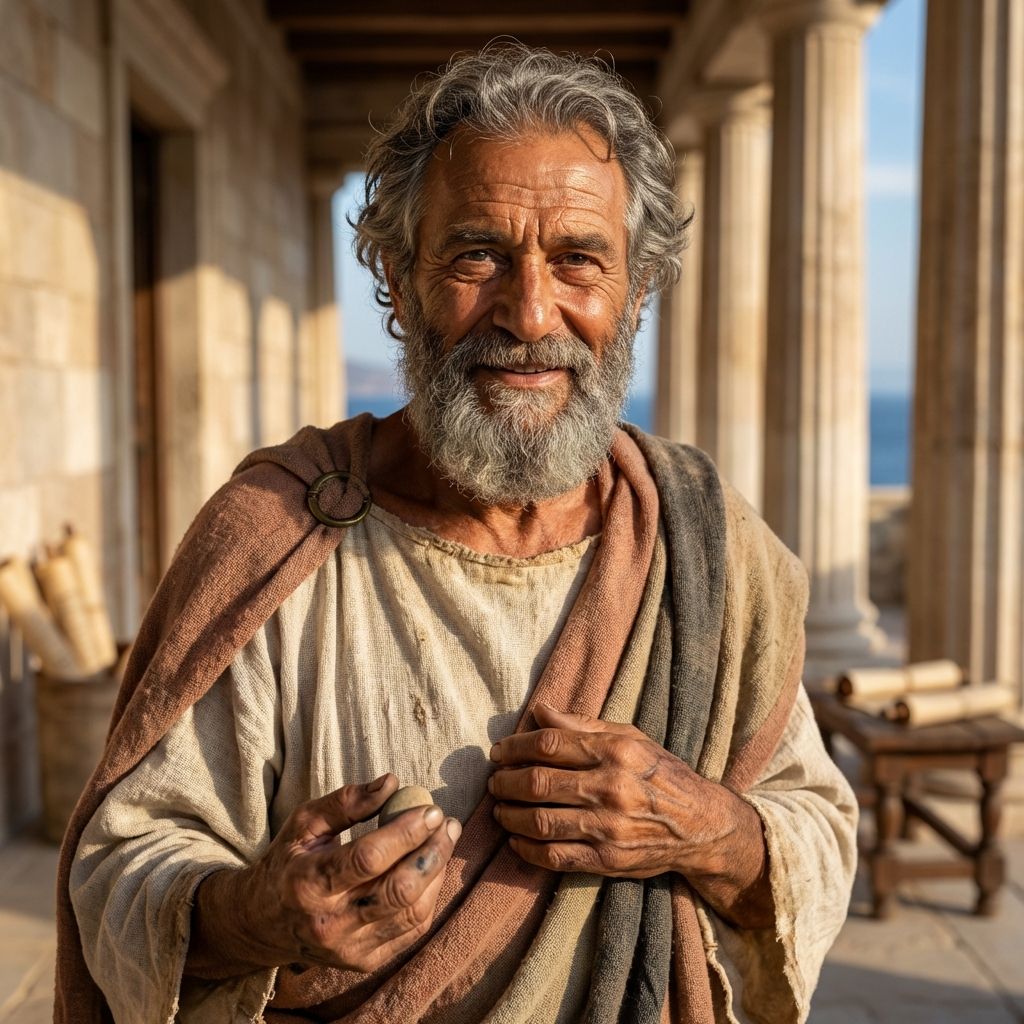
'Twas Christmas broach'd the mightiest ale;
'Twas Christmas told the merriest tale;
A Christmas gambol oft could cheer
The poor man's heart through half the year.
About This Quote

These lines are from Sir Walter Scott’s narrative poem *Marmion* (1808), in the famous “Christmas” passage that evokes the older, communal festivities of the season—feasting, storytelling, and rustic games—set against the poem’s broader chivalric-historical canvas. Scott, a central figure in Romantic-era historical writing, often used such set pieces to idealize (and preserve in literature) traditional Scottish and English customs. Here he pauses the martial narrative to sketch how Christmas hospitality once functioned as a social institution: a time when even the poor could share in abundance and carry the memory of that cheer long after the holiday ended.
Interpretation
Scott presents Christmas as a cultural engine of generosity and morale. The “mightiest ale” and “merriest tale” stand for material plenty and imaginative abundance—food and drink alongside communal narrative. The final couplet emphasizes the holiday’s psychological economy: a brief season of shared festivity can sustain “the poor man’s heart” for months, suggesting that ritual joy is not trivial but socially necessary. The stanza also participates in Romantic nostalgia, framing Christmas as an older, more cohesive tradition in which class boundaries softened through hospitality. In Scott’s hands, Christmas becomes a moral argument for fellowship and a reminder of how collective celebration can buffer hardship.
Source
Walter Scott, *Marmion: A Tale of Flodden Field* (1808), Canto VI (the “Christmas” stanza).