I have always thought of Christmas time, when it has come round apart from the veneration due to its sacred name and origin, if anything belonging to it can be apart from that - as a good time; a kind, forgiving, charitable, pleasant time.
About This Quote

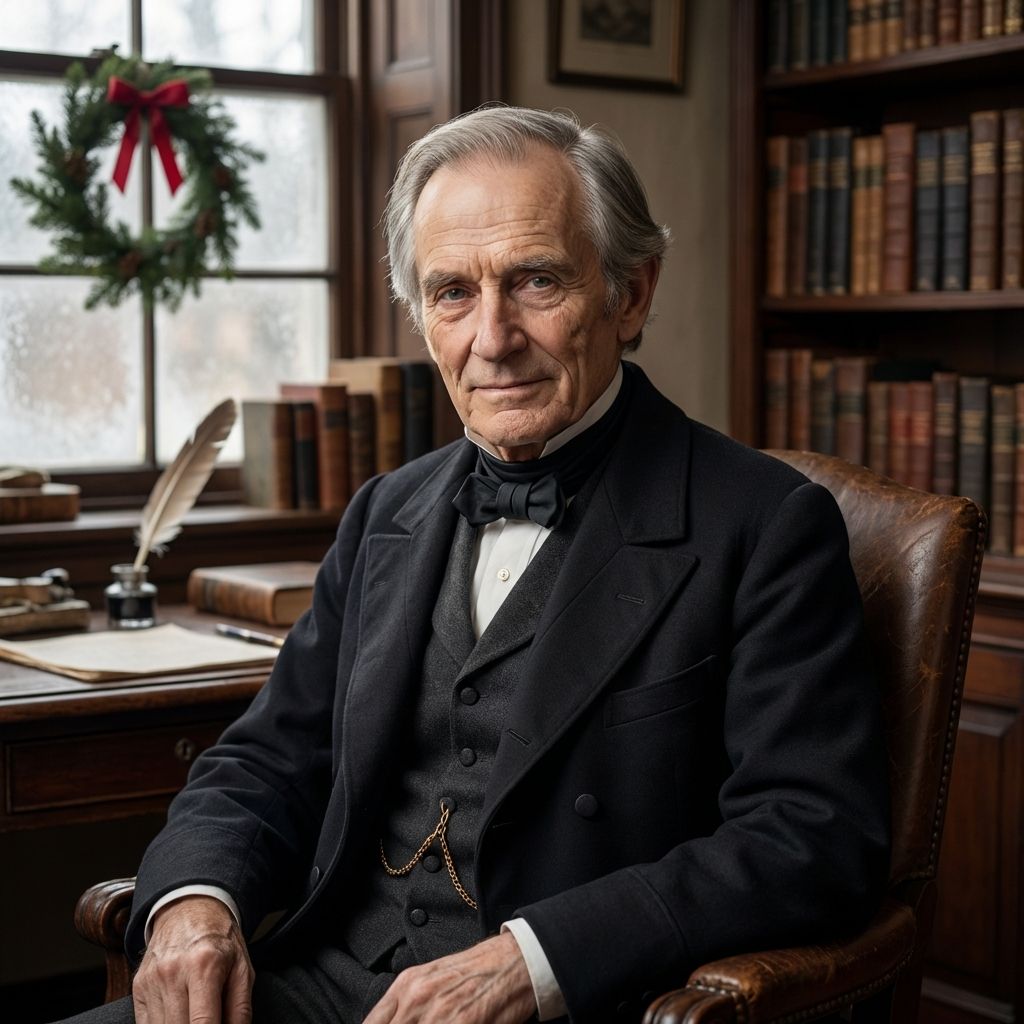
This line appears in Charles Dickens’s novella A Christmas Carol (1843), in the early exchange between Ebenezer Scrooge and his nephew Fred. Fred has come to Scrooge’s counting-house on Christmas Eve to offer holiday greetings and invite him to dinner. Scrooge dismisses Christmas as a “humbug,” and Fred responds by defending the season’s moral and social value, even for those who are not religiously observant. Dickens wrote the book amid concerns about urban poverty and social inequality in industrial England, and he uses Fred’s speech to articulate the humane, reform-minded spirit the story urges upon its readers.
Interpretation
Fred’s statement frames Christmas not merely as a religious commemoration but as a recurring social occasion that encourages generosity, reconciliation, and empathy. The careful qualification—“apart from the veneration due to its sacred name and origin”—acknowledges Christianity while insisting that the season’s ethical effects can be recognized more broadly. In the novella, this view functions as a moral counterweight to Scrooge’s utilitarian cynicism: Christmas becomes a symbolic interval in which ordinary self-interest is suspended and people feel called to “open” their hearts to others. The passage thus encapsulates Dickens’s larger argument that communal warmth and charity are practical virtues capable of reshaping social relations.
Extended Quotation
“I have always thought of Christmas time, when it has come round—apart from the veneration due to its sacred name and origin, if anything belonging to it can be apart from that—as a good time; a kind, forgiving, charitable, pleasant time; the only time I know of, in the long calendar of the year, when men and women seem by one consent to open their shut-up hearts freely, and to think of people below them as if they really were fellow-passengers to the grave, and not another race of creatures bound on other journeys. And therefore, uncle, though it has never put a scrap of gold or silver in my pocket, I believe that it has done me good, and will do me good; and I say, God bless it!”
Source
Charles Dickens, A Christmas Carol. In Prose. Being a Ghost Story of Christmas (London: Chapman & Hall, 1843), Stave One (“Marley’s Ghost”), in Fred’s speech to Scrooge beginning “I have always thought of Christmas time…”