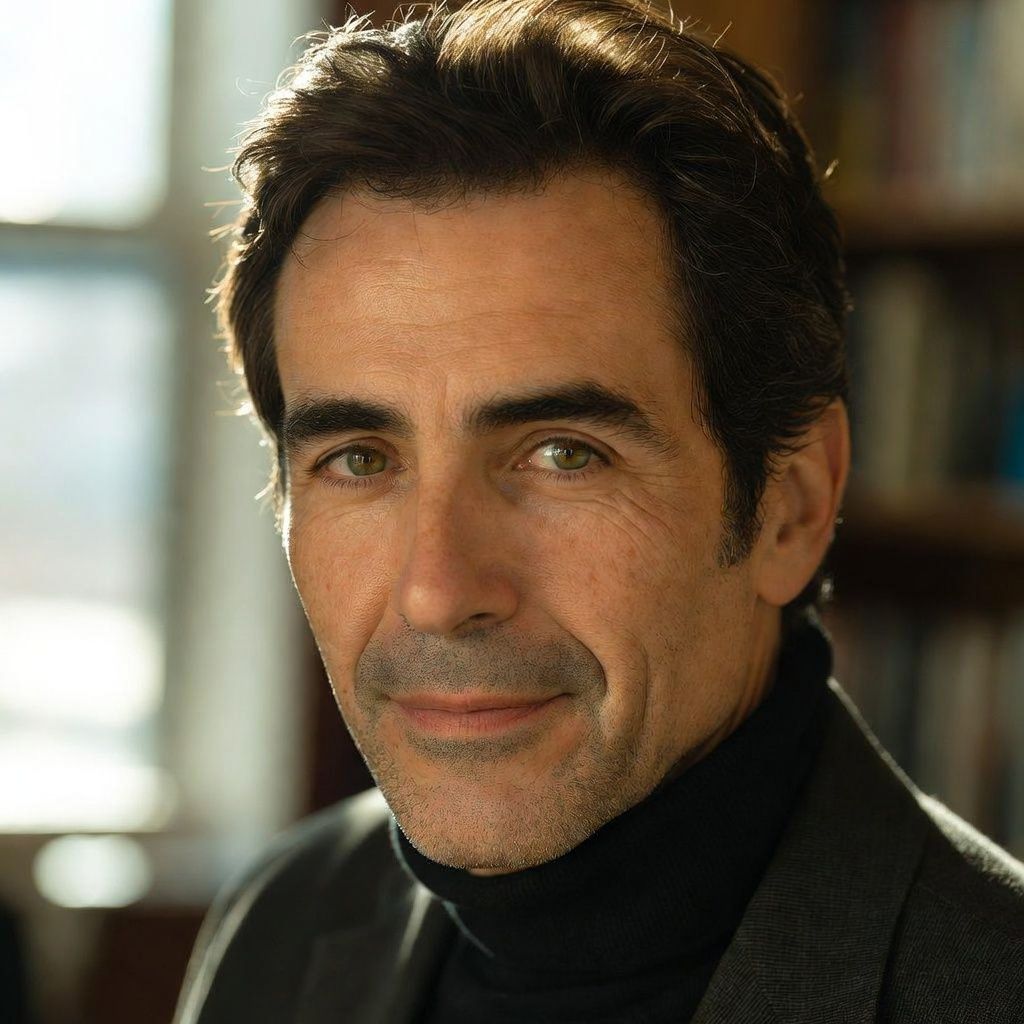
I believe this passionately: that we don’t grow into creativity, we grow out of it. Or rather, we get educated out if it.
About This Quote

Ken Robinson (1950–2020), a British educator and adviser on arts education, became widely known for arguing that modern schooling often suppresses divergent thinking. This line is associated with his public talks and writing in the mid-to-late 2000s, when he was critiquing standardized curricula, high-stakes testing, and narrow definitions of “ability.” In that setting, Robinson contrasts children’s natural imaginative play and risk-taking with the way many educational systems reward conformity and penalize mistakes. The quote is typically used to frame his broader case for redesigning education to cultivate creativity rather than treating it as an extracurricular trait.
Interpretation
Robinson’s claim reverses a common assumption: that creativity is an advanced skill acquired with age. He suggests instead that creativity is a default human capacity—especially visible in childhood—and that socialization and schooling can erode it by privileging correct answers, linear reasoning, and fear of being wrong. “Educated out of it” is not an attack on learning itself but on forms of education that narrow what counts as intelligence and discourage experimentation. The quote’s significance lies in its moral and policy implication: if creativity declines, it is not inevitable; it is partly designed, and therefore can be redesigned through pedagogy that values curiosity, play, and multiple ways of knowing.
Variations
1) “We don’t grow into creativity, we grow out of it. Or rather, we get educated out of it.”
2) “We don’t grow into creativity; we grow out of it—often, we’re educated out of it.”