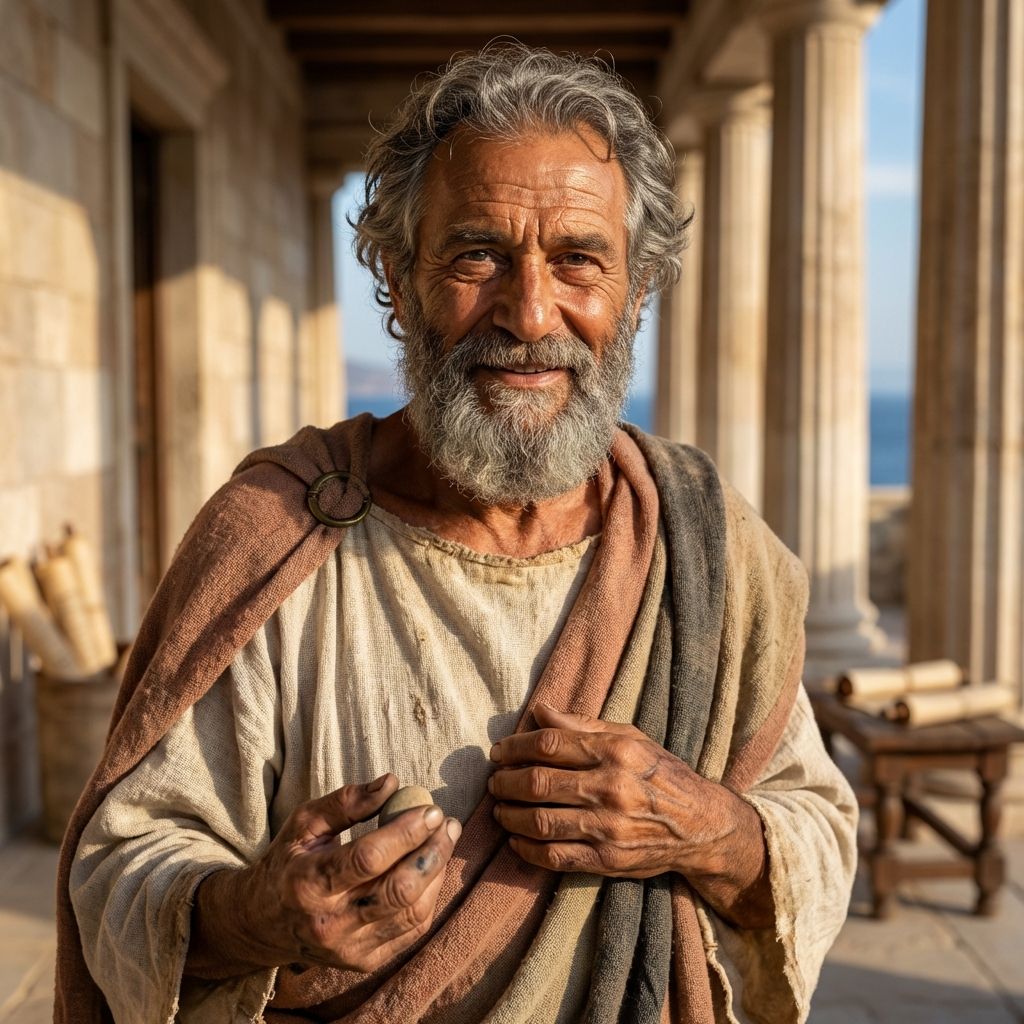
His best companions, innocence and health;
And his best riches, ignorance of wealth.
And his best riches, ignorance of wealth.
About This Quote

These lines are from Oliver Goldsmith’s long poem "The Deserted Village" (1770), a lament for the displacement of rural communities and the moral costs of wealth and “improvement.” In the poem Goldsmith contrasts the simple contentment of village life with the corrupting influence of luxury and enclosure, presenting the poor villager as possessing non-monetary “riches.” The couplet occurs in a descriptive passage idealizing the humble laborer’s condition—healthy, morally unspoiled, and free from the anxieties that accompany the pursuit or possession of wealth—within Goldsmith’s broader critique of social and economic change in 18th-century Britain.
Interpretation
Goldsmith frames true prosperity as a state of mind and body rather than a financial condition. “Innocence and health” are cast as the most faithful companions, suggesting that moral clarity and physical well-being provide steadier happiness than status or luxury. The paradox “ignorance of wealth” implies that not knowing (or not valuing) riches shields one from envy, greed, and the restless comparison that money culture breeds. The couplet participates in the poem’s larger argument that economic “progress” can impoverish communities spiritually and socially even as it concentrates material wealth, making simplicity a form of protection and a measure of genuine contentment.
Source
Oliver Goldsmith, "The Deserted Village" (1770).