De nigger woman is de mule uh de world so fur as Ah can see. Ah been prayin’ fuh it tuh be different wid you.
About This Quote
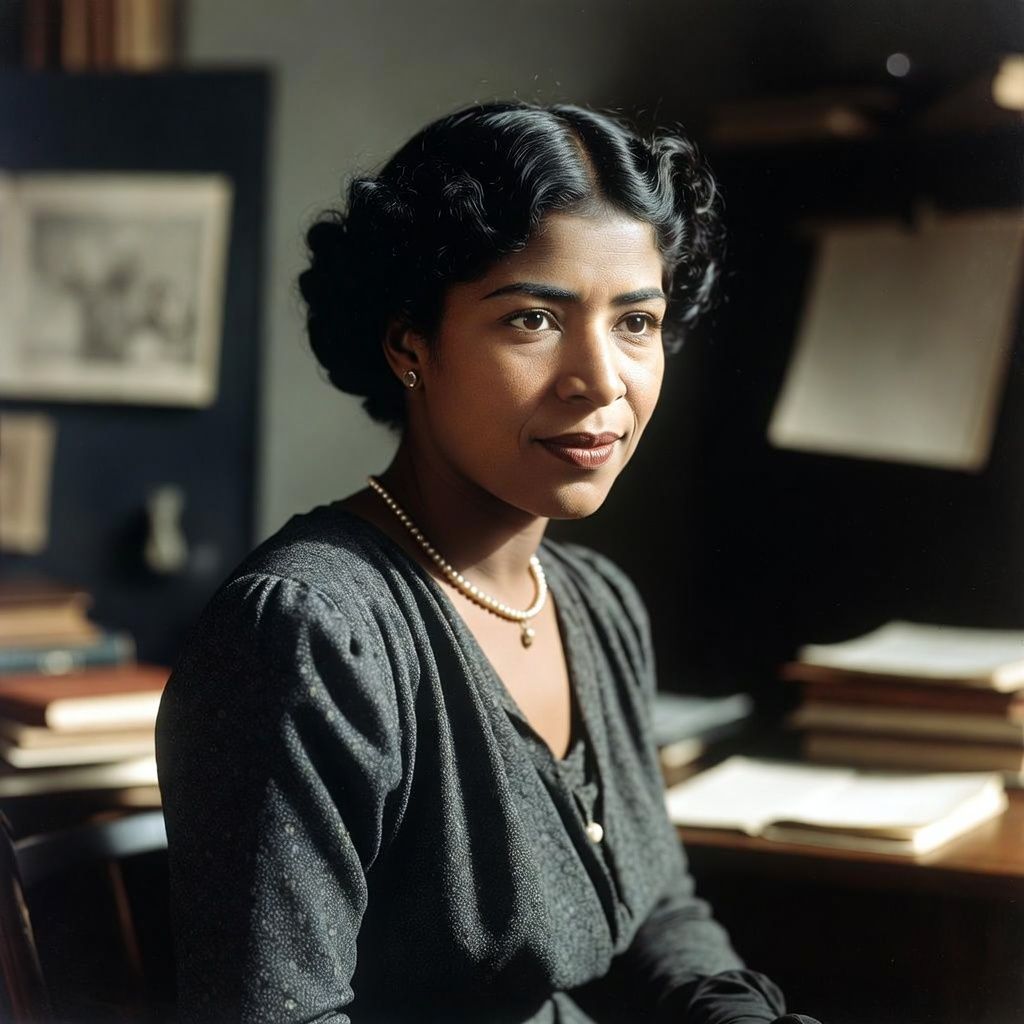
This line is spoken by Nanny Crawford, the grandmother of Janie Crawford, early in Zora Neale Hurston’s novel *Their Eyes Were Watching God* (1937). Nanny, born into slavery and shaped by the violence and precarity of Reconstruction-era life, is trying to explain to Janie why she insists on arranging a “safe” marriage for her. In the wake of Janie’s sexual awakening and Nanny’s fear that Janie will be exploited, Nanny frames Black women’s lives as burdened by labor, sexual vulnerability, and social disregard. The remark functions as a hard-earned, protective warning rooted in Nanny’s experience rather than abstract theory.
Interpretation
The metaphor of the “mule” compresses a social critique into a single image: the Black woman as the one expected to carry the heaviest loads while receiving the least care, autonomy, or recognition. Nanny’s statement links race, gender, and class oppression—suggesting that Black women are positioned beneath both white society and Black men in the hierarchy of power. Yet the second sentence (“Ah been prayin’ fuh it tuh be different wid you”) introduces tenderness and aspiration: Nanny wants Janie to escape this inherited fate. The quote thus captures a central tension in the novel between security and self-realization, and between protective pragmatism and Janie’s desire for a fuller, self-defined life.
Source
Zora Neale Hurston, *Their Eyes Were Watching God* (Philadelphia: J. B. Lippincott, 1937), spoken by Nanny Crawford.