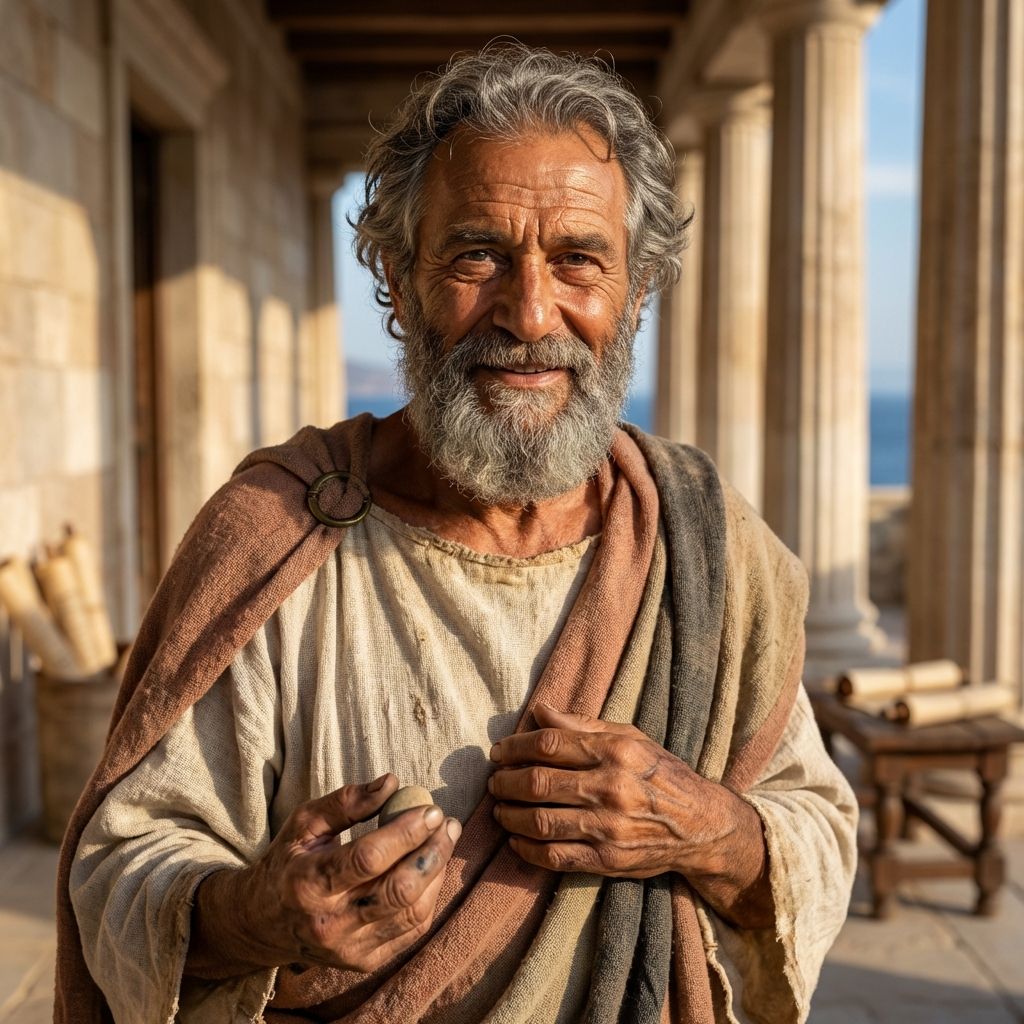
Earth's crammed with heaven... But only he who sees, takes off his shoes.
About This Quote

These lines come from Elizabeth Barrett Browning’s verse-novel “Aurora Leigh” (1856), spoken by the poet-protagonist as part of a meditation on perception, reverence, and the sacredness latent in ordinary life. Browning wrote the work in mid‑Victorian England, when debates about faith, science, and social reform were intense, and she sought a modern poetic form capable of addressing contemporary realities without abandoning spiritual depth. The image of removing one’s shoes echoes the biblical scene of Moses before the burning bush (Exodus 3:5), invoking a posture of humility before holy ground—here relocated from a single miraculous site to the everyday earth itself.
Interpretation
The passage argues that the world is saturated with the divine (“heaven”), but most people move through it inattentively. Only the person who truly “sees” responds with reverence—symbolized by taking off one’s shoes, as if standing on holy ground. Browning contrasts spiritual perception with mere physical sight: holiness is not rare, but recognition is. The lines also imply an ethical stance: to perceive the sacred in the ordinary is to treat life, nature, and other people with humility and care. In “Aurora Leigh,” this functions as a defense of poetry and imagination as faculties that disclose meaning and sanctity within modern, everyday experience.
Extended Quotation
Earth's crammed with heaven,
And every common bush afire with God;
But only he who sees, takes off his shoes,
The rest sit round it and pluck blackberries.
Variations
1) "Earth's crammed with heaven, / And every common bush afire with God; / But only he who sees, takes off his shoes." (often quoted without the final blackberry line)
2) "Earth's crammed with heaven, and every common bush afire with God; but only he who sees takes off his shoes." (single-line punctuation/line-break consolidation)
3) "But only he who sees takes off his shoes; the rest sit round it and pluck blackberries." (frequently excerpted as a standalone aphorism)
Source
Elizabeth Barrett Browning, “Aurora Leigh” (1856), Book VII.