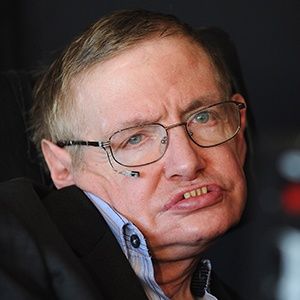
It is generally recognised that women are better than men at languages, personal relations and multi-tasking, but less good at map-reading and spatial awareness. It is therefore not unreasonable to suppose that women might be less good at mathematics and physics.
About This Quote
Interpretation
The remark strings together a set of widely circulated gender stereotypes (women as stronger in verbal/social skills; men as stronger in spatial tasks) and then treats them as premises for a further inference about aptitude in mathematics and physics. Read critically, it illustrates how “common sense” generalizations can be used to naturalize assumptions about who belongs in certain intellectual fields, even when the underlying claims are contested or only weakly supported. The final clause (“not unreasonable to suppose”) is rhetorically cautious, but it still legitimizes a speculative leap from alleged average differences to expectations about performance in highly trained disciplines—an example of how cultural narratives about ability can be framed as neutral reasoning.