To improve is to change; to be perfect is to have changed often.
About This Quote
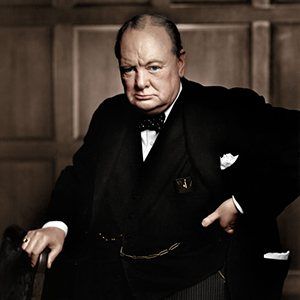
The line is widely attributed to Winston Churchill in collections of his sayings, but it is most securely traceable to his postwar political writing rather than to a speech. It appears in his 1947 book of reflections and arguments about governance and public life, where Churchill defends adaptability as a practical virtue in politics and administration. In that setting, the remark functions as a concise justification for revising one’s views in response to experience—an implicit rebuttal to critics who equate consistency with wisdom. The context is thus Churchill’s broader case that effective leadership and sound policy require learning, adjustment, and the courage to alter course when circumstances or evidence change.
Interpretation
The statement equates improvement with change: growth requires altering habits, beliefs, or methods rather than clinging to what is familiar. The second clause intensifies the idea by redefining “perfection” not as a final, static state but as the cumulative result of repeated revisions—continual self-correction over time. Read this way, the quote endorses intellectual humility and responsiveness: being “perfect” means being willing to update oneself again and again. It also implicitly critiques rigidity, suggesting that refusing to change is a refusal to improve. The epigram’s appeal lies in its paradoxical framing of perfection as ongoing process rather than completion.
Variations
1) “To improve is to change; to be perfect is to change often.”
2) “To improve is to change; to be perfect is to have changed often.”