But most through midnight streets I hear
How the youthful harlot’s curse
Blasts the newborn infant’s tear
And blights with plagues the marriage hearse.
How the youthful harlot’s curse
Blasts the newborn infant’s tear
And blights with plagues the marriage hearse.
About This Quote
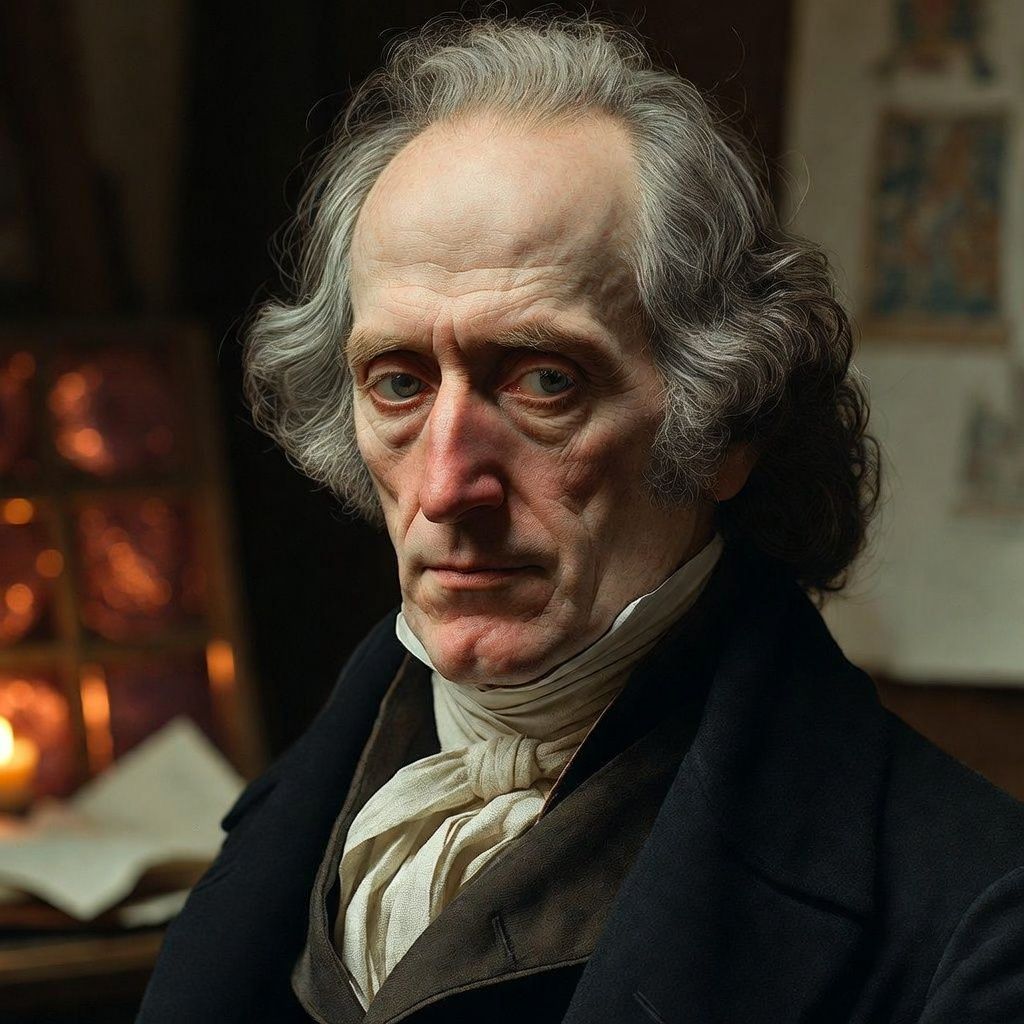
These lines come from William Blake’s poem “London,” published in 1794 in his illustrated collection Songs of Experience (often issued together with Songs of Innocence). Written amid the social dislocation of late‑18th‑century London—war, poverty, prostitution, child labor, and harsh moral and legal regulation—the poem presents a night walk through the city in which the speaker “hears” suffering everywhere. Blake, a radical artisan-poet and engraver, was deeply critical of institutions he saw as complicit in oppression (state, church, and conventional marriage), and “London” concentrates that critique into a bleak urban soundscape.
Interpretation
Blake links private misery to public systems of control. The “youthful harlot’s curse” suggests prostitution as both a symptom of economic coercion and a source of contagion—literal (venereal disease) and moral (social corruption). The shocking coupling of “newborn infant’s tear” with “marriage hearse” collapses beginnings and endings: innocence is “blasted” at birth, and marriage—supposedly a sanctified union—becomes a vehicle of death. The stanza’s compressed imagery implies that the city’s institutions turn natural human bonds (sex, family, childhood) into sites of exploitation and disease, making suffering cyclical and inescapable.
Source
William Blake, “London,” in Songs of Experience (1794).