You press the button, we do the rest.
About This Quote
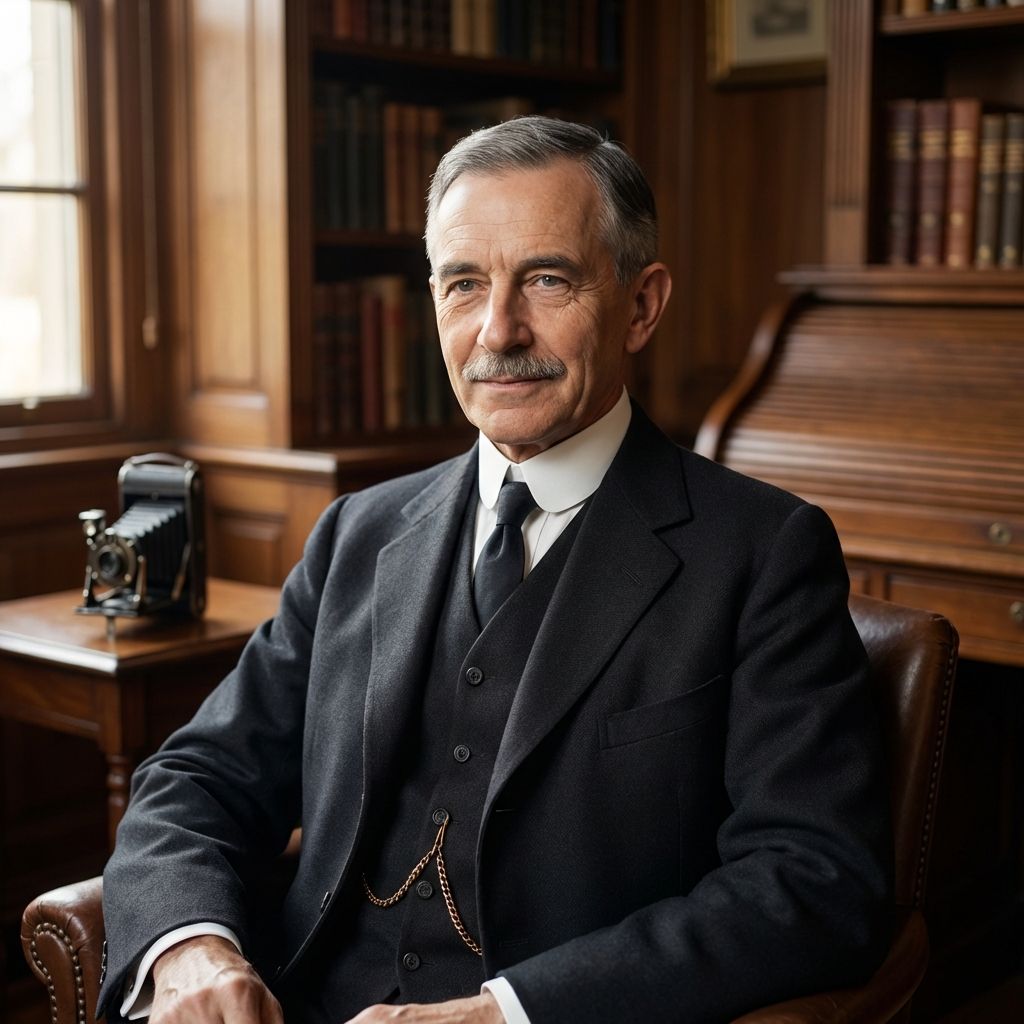
The line is best known as Kodak’s early advertising slogan, associated with George Eastman’s drive to make photography simple and mass-market. In 1888 Eastman introduced the first Kodak camera, sold preloaded with roll film; after the customer exposed the roll, the entire camera was sent back to the company for developing, printing, and reloading. The promise—captured in this phrase—summed up Eastman’s business model: remove technical barriers (chemicals, plates, darkrooms) so ordinary consumers could take pictures easily. Although often attributed directly to Eastman, it circulated primarily as copy used to market the Kodak system in the late 1880s and 1890s.
Interpretation
“You press the button, we do the rest” encapsulates a modern consumer ideal: technology should be usable without specialized knowledge. The “button” stands for the only action required of the customer—an early articulation of user-friendly design—while “we do the rest” shifts the complex, messy labor (processing, printing, reloading) to an expert service provider. In literary terms, the slogan compresses a whole narrative of democratization into a single antithesis: effortless amateur action versus professional industrial completion. It also signals a new relationship between individual memory-making and corporate infrastructure, foreshadowing later “push-button” cultures from Polaroid to smartphone photography.
Variations
“You press the button—we do the rest.”