[On the principles of Italian neorealism:] I believe in imagination, but I have more faith in reality, in people. I am not interested in prearranged encounters, in the drama of things that happen to come together.
About This Quote
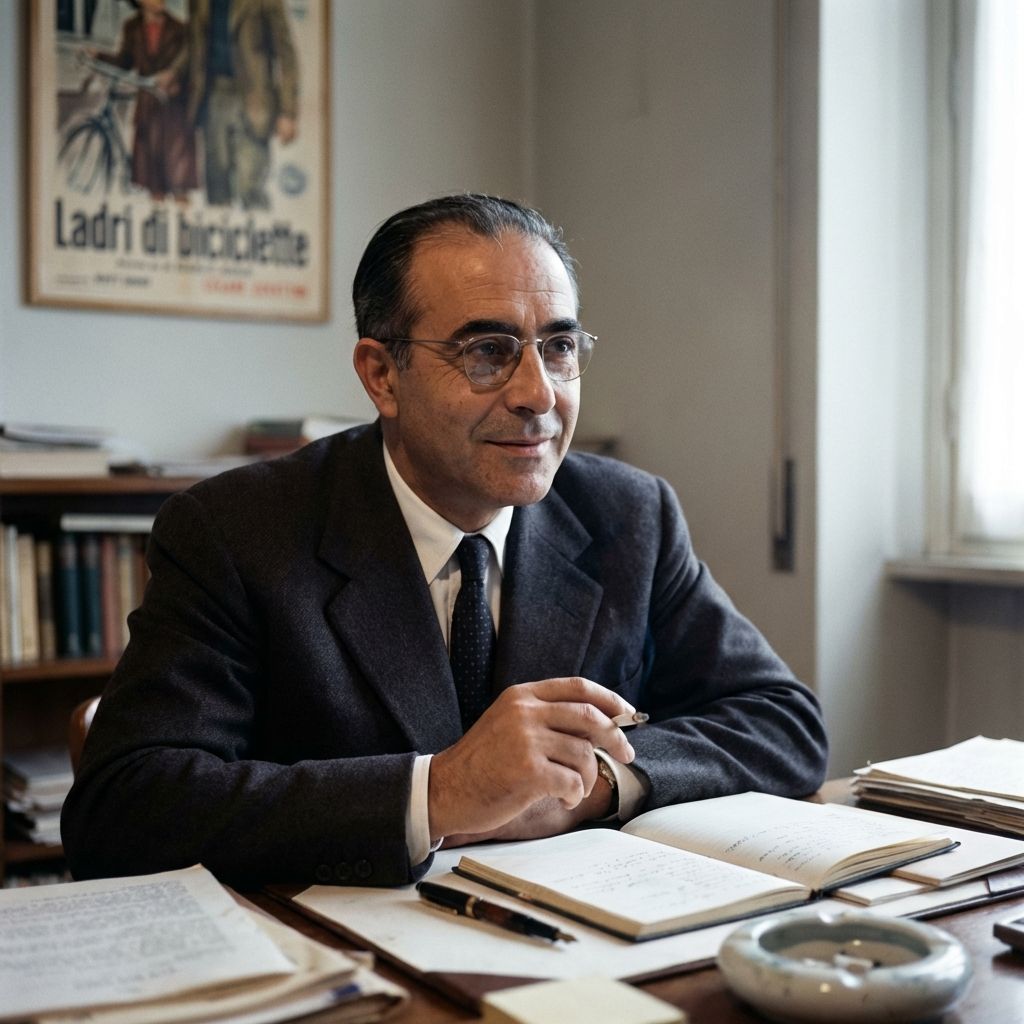
Cesare Zavattini (1902–1989), the key screenwriter-theorist of Italian neorealism and a frequent collaborator of Vittorio De Sica, articulated these ideas in postwar discussions of what neorealist cinema should be. In the late 1940s and early 1950s, amid Italy’s social dislocation after Fascism and World War II, Zavattini argued against conventional, plot-driven filmmaking—especially the contrived coincidences and “well-made” dramatic structures typical of commercial cinema. His program favored attention to ordinary people, everyday situations, and the moral weight of lived experience, aligning with neorealism’s use of real locations, nonprofessional actors, and stories drawn from contemporary social reality.
Interpretation
Zavattini contrasts “imagination” with a deeper trust in reality: the filmmaker’s task is not to fabricate ingenious plots but to discover meaning in the lives of ordinary people. By rejecting “prearranged encounters” and the drama of convenient convergence, he criticizes narrative artifice—coincidences, tidy climaxes, and manipulative suspense—that can distort social truth. The statement encapsulates neorealism’s ethical and aesthetic claim that reality is already dramatic if observed honestly. It also implies a democratic impulse: cinema should attend to common experience rather than exceptional heroes, allowing viewers to confront social conditions directly rather than through comforting, prepackaged storytelling.