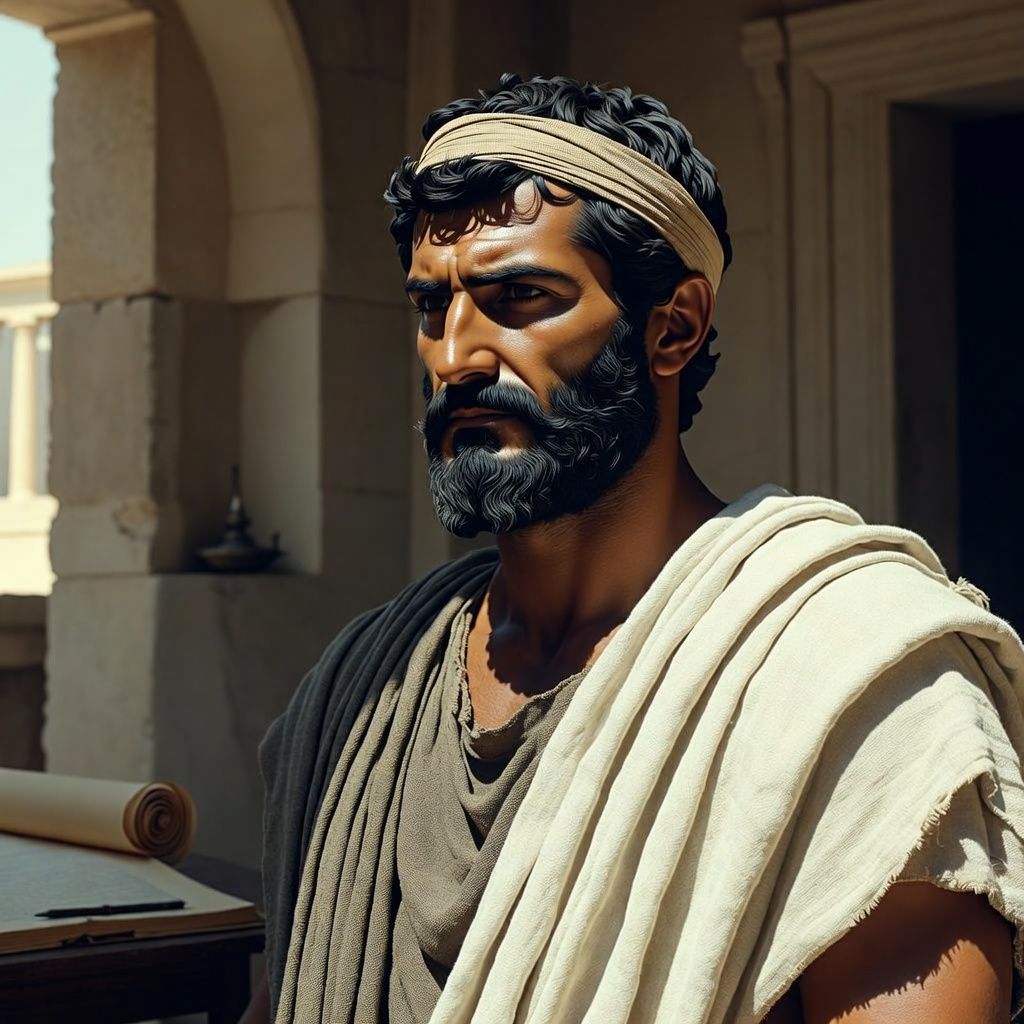
If I have seen further it is by standing on the shoulders of Giants.
About This Quote

Newton wrote this line in a private letter to his fellow scientist Robert Hooke during a period of intense exchange about optics and scientific priority. Dated 5 February 1675/6 (Old Style), the letter appears in Newton’s correspondence and is often read against the backdrop of his sometimes fraught relationship with Hooke, who had earlier proposed ideas about light and color. In the letter Newton acknowledges the cumulative nature of scientific discovery—whether as sincere modesty, diplomatic courtesy, or a pointed remark in a rivalry-laden context. The phrase also echoes an older medieval topos about “dwarfs on the shoulders of giants,” long used to describe intellectual inheritance.
Interpretation
The sentence frames knowledge as fundamentally cumulative: individual breakthroughs become possible because earlier thinkers built conceptual and methodological foundations. Newton’s “seen further” suggests expanded explanatory reach—new laws, predictions, and unifications—made possible by prior “giants” (major predecessors). The line has endured because it captures an ideal of intellectual humility while also asserting progress: later work can surpass earlier work without negating it. In Newton’s case, it also functions rhetorically within scientific culture, where credit and priority mattered; the remark can be read both as gracious acknowledgment and as a subtle positioning of himself as the one who now “sees further.”
Extended Quotation
What Des-Cartes did was a good step. You have added much in several ways, & especially in taking ye colours of thin plates into philosophical consideration. If I have seen further it is by standing on ye shoulders of Giants.
Variations
1) “If I have seen further, it is by standing on the shoulders of giants.”
2) “If I have seen farther it is by standing on the shoulders of giants.”
3) “If I have seen further it is by standing upon the shoulders of giants.”
Source
Isaac Newton, letter to Robert Hooke, 5 February 1675/6 (Old Style), in The Correspondence of Isaac Newton (ed. H. W. Turnbull), Vol. 1.