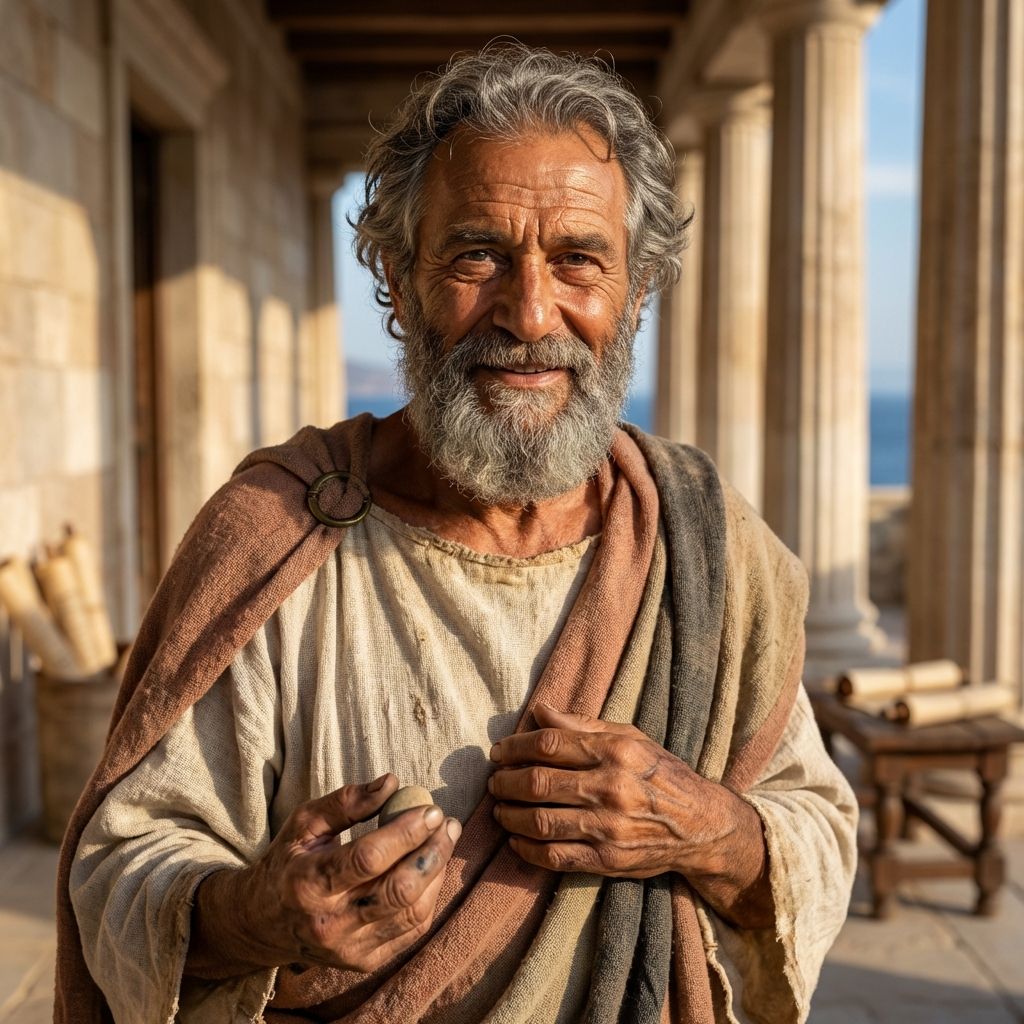
True contentment depends not upon what we have; a tub was large enough for Diogenes, but a world was too little for Alexander.
About This Quote

Charles Caleb Colton (1780–1832), an English cleric-turned-writer, is best known for his aphoristic collection *Lacon; or, Many Things in Few Words* (1820–1822). The remark belongs to Colton’s moralizing habit of illustrating ethical points through famous classical exempla. Here he contrasts Diogenes the Cynic—legendary for radical simplicity and for living in a large jar or “tub”—with Alexander the Great, emblem of limitless conquest and ambition. Colton uses the well-known Diogenes–Alexander anecdotal tradition to frame a reflection on happiness as a matter of desire and temperament rather than possessions or power.
Interpretation
The aphorism argues that contentment is internal: it depends less on what one owns than on the scale of one’s wants. Diogenes represents self-sufficiency—so little is needed that even a “tub” can feel ample—while Alexander represents insatiability, for whom even “a world” cannot satisfy. Colton’s antithesis turns two iconic figures into a psychological lesson: abundance without limits of desire produces dissatisfaction, whereas voluntary simplicity can produce freedom. The line also critiques acquisitive ambition by implying that conquest enlarges possessions but not necessarily happiness, because the appetite for “more” expands faster than what it acquires.
Source
Charles Caleb Colton, "Lacon; or, Many Things in Few Words" (London: Longman, Hurst, Rees, Orme, and Brown, 1820).