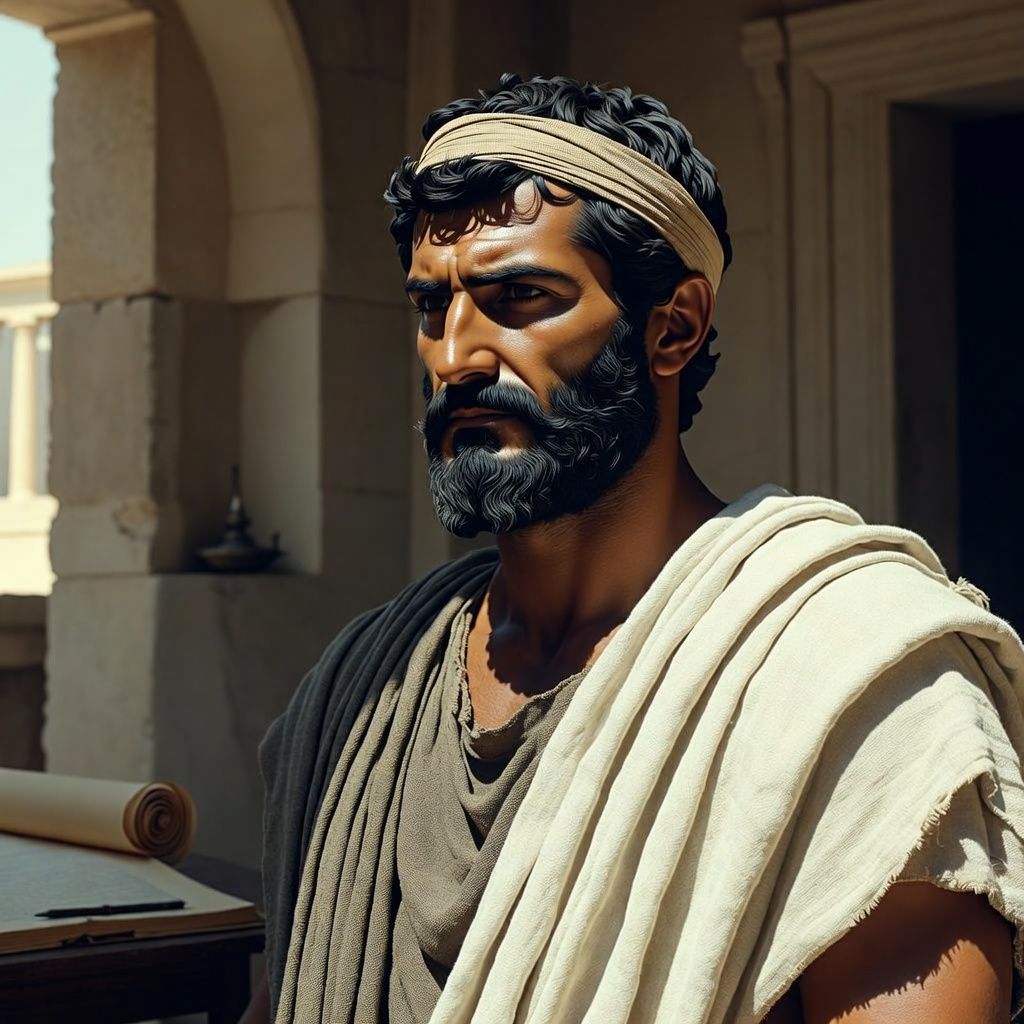
He is a wise man who does not grieve for the things which he has not, but rejoices for those which he has.
About This Quote

Epictetus (c. 50–135 CE), a former slave turned Stoic teacher, taught that human flourishing depends on focusing on what is “up to us” (our judgments, choices, and character) rather than on externals like wealth, status, or possessions. This sentiment aligns with the practical moral instruction associated with his school at Nicopolis and later preserved by his student Arrian in the Discourses and the Enchiridion. The quote is commonly circulated in modern collections as a Stoic maxim about contentment and gratitude, reflecting Epictetus’ broader program of training the mind to meet loss, scarcity, and disappointment without distress.
Interpretation
The saying contrasts two mental habits: grieving over absence (a form of attachment to externals) versus rejoicing in what is present (a disciplined appreciation of what fate has allotted). In Stoic terms, grief over “what I don’t have” often stems from mistaken value judgments—treating indifferent things as necessary for happiness. Wisdom, by contrast, lies in aligning desire with reality, cultivating gratitude, and locating the good in one’s own rational agency. The line also anticipates later ethical traditions that praise contentment: it is not a call to passivity, but to emotional freedom—pursuing goals without making one’s peace of mind depend on their acquisition.