Ah, but a man’s reach should exceed his grasp,
Or what’s a heaven for?
About This Quote
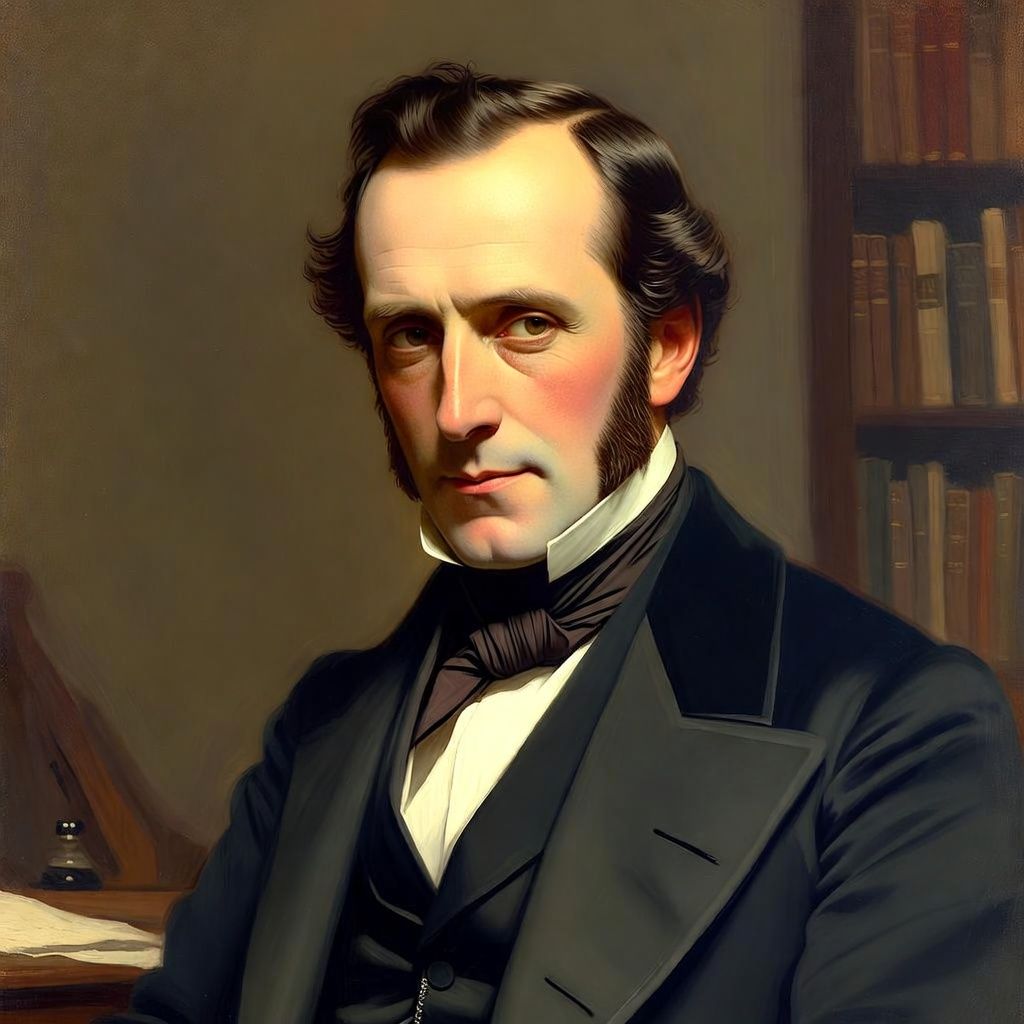
Browning’s line comes from his long poem “Andrea del Sarto” (1855), a dramatic monologue spoken by the Renaissance painter Andrea del Sarto to his wife, Lucrezia. In Browning’s portrayal, Andrea is technically flawless—nicknamed “the faultless painter”—yet he feels he lacks the imaginative and spiritual striving that marks greater artists. The remark arises as he reflects on the gap between perfect execution and higher aspiration, contrasting his own limited ambition (and compromised life) with the ideal of reaching beyond one’s abilities. The poem is part of Browning’s mid‑Victorian exploration of psychology, art, and moral choice through historical voices.
Interpretation
The couplet argues that human excellence depends on striving beyond present capability: aspiration should outstrip achievement. Browning frames this not as mere ambition but as a spiritual and moral principle—our “reach” toward ideals, beauty, or goodness is what gives meaning to life, even when we fall short. The rhetorical question “Or what’s a heaven for?” suggests that unattainable perfection (whether conceived religiously or as an artistic ideal) functions as a horizon that draws us forward. In the poem’s context, the line is bittersweet: Andrea recognizes that technical mastery without daring vision can become a kind of failure, and that settling for what one can easily “grasp” diminishes the soul.
Variations
“A man’s reach should exceed his grasp, / Or what’s a heaven for?” (often quoted without the opening “Ah, but”).
Source
Robert Browning, “Andrea del Sarto,” in Men and Women (London: Chapman and Hall, 1855).