Britain and France had to choose between war and dishonour. They chose dishonour. They will have war.
About This Quote
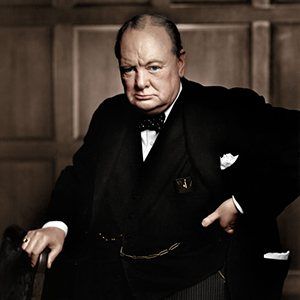
Churchill delivered this line in the House of Commons on 5 October 1938, during the debate following the Munich Agreement (30 September 1938). Prime Minister Neville Chamberlain had returned from Munich claiming he had secured “peace for our time” by conceding the Sudetenland—Czechoslovakia’s fortified border region—to Hitler. Churchill, then a backbench Conservative and a leading critic of appeasement, argued that Britain and France had sacrificed a smaller ally’s security and their own strategic position for a temporary respite. He warned that the concession would embolden Nazi Germany and make a larger European war more likely rather than less.
Interpretation
The sentence frames appeasement as a false bargain: avoiding immediate conflict by yielding to aggression is portrayed as “dishonour,” a moral and strategic capitulation. Churchill’s logic is that surrendering principles and allies does not remove the aggressor’s aims; it merely postpones confrontation while worsening the balance of power. The epigrammatic structure—choice, shameful decision, inevitable consequence—turns policy critique into prophecy. Its enduring significance lies in how it crystallizes a broader argument about deterrence and credibility: concessions to coercion can invite further demands, making eventual conflict both more likely and more costly.
Variations
They had to choose between war and dishonour. They chose dishonour. They will have war.
Source
Winston S. Churchill, speech in the House of Commons during the Munich Agreement debate, 5 October 1938 (reported in Hansard, HC Deb 05 October 1938).