Dancing and singing, movements on the stage, and the different types of miming are all acts performed by the body. Moments of “no action” occur in between…. The actions before and after an interval of “no action” must be linked by entering the state of mindlessness in which the actor conceals even from himself his own intent.
About This Quote
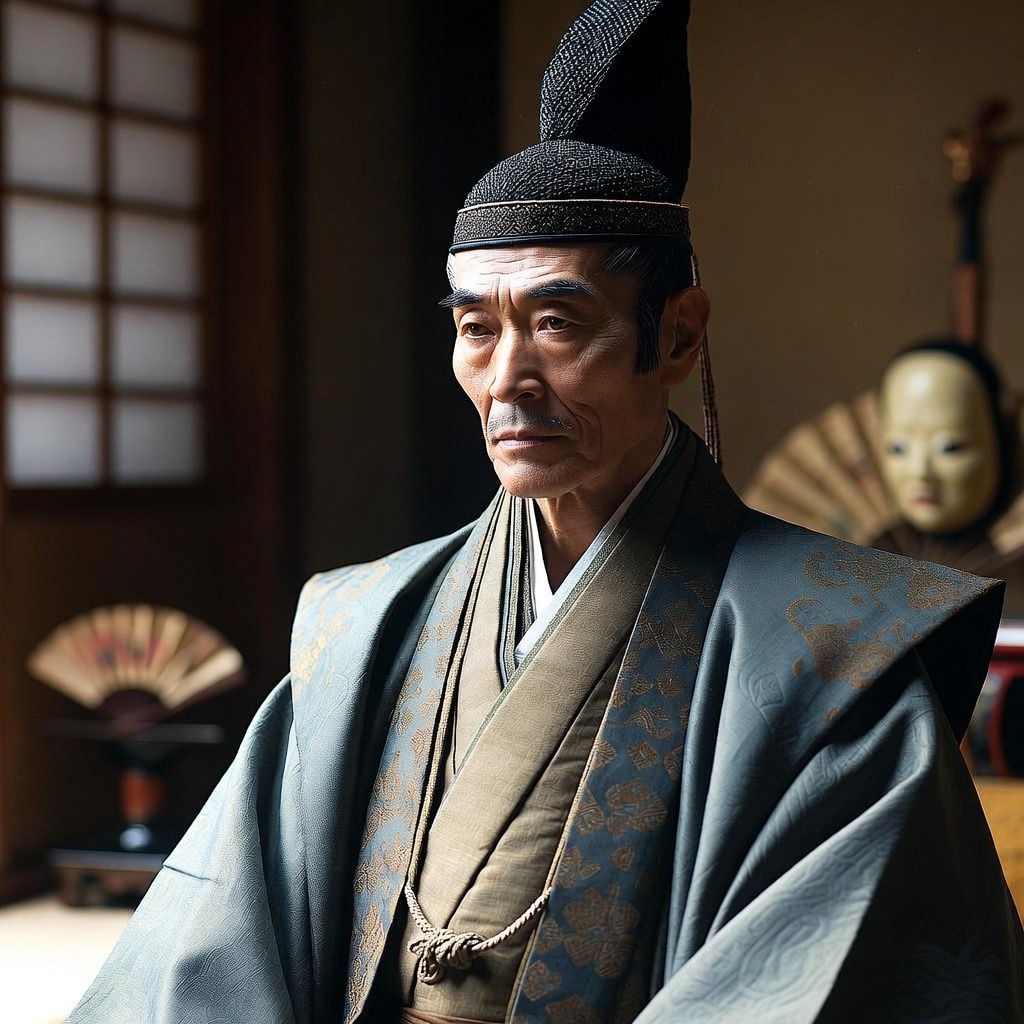
This passage reflects Zeami’s theorizing about Noh performance, where the actor’s craft lies not only in overt movement (dance, chant, mime) but also in the charged stillness between actions. In his treatises written for the training of performers within his lineage, Zeami repeatedly emphasizes the importance of ma (the interval) and of maintaining an inner composure that prevents the audience from seeing calculation. The remark belongs to his practical-aesthetic instruction on how transitions and pauses should be handled so that a performance feels continuous and alive even when the body is momentarily “doing nothing.”
Interpretation
Zeami distinguishes outward technique from the inner condition that makes technique persuasive. “No action” is not mere inactivity; it is a charged pause that must be actively sustained. By entering a state of “mindlessness,” the performer lets intention recede so that transitions feel inevitable rather than calculated. The actor’s body remains poised, and the audience senses an unbroken line of feeling across the silence. The paradox is central to Zeami’s aesthetics: the highest artistry hides its own art. When the performer no longer appears to be trying to express something, expression becomes more convincing, and the performance gains depth, restraint, and mystery.