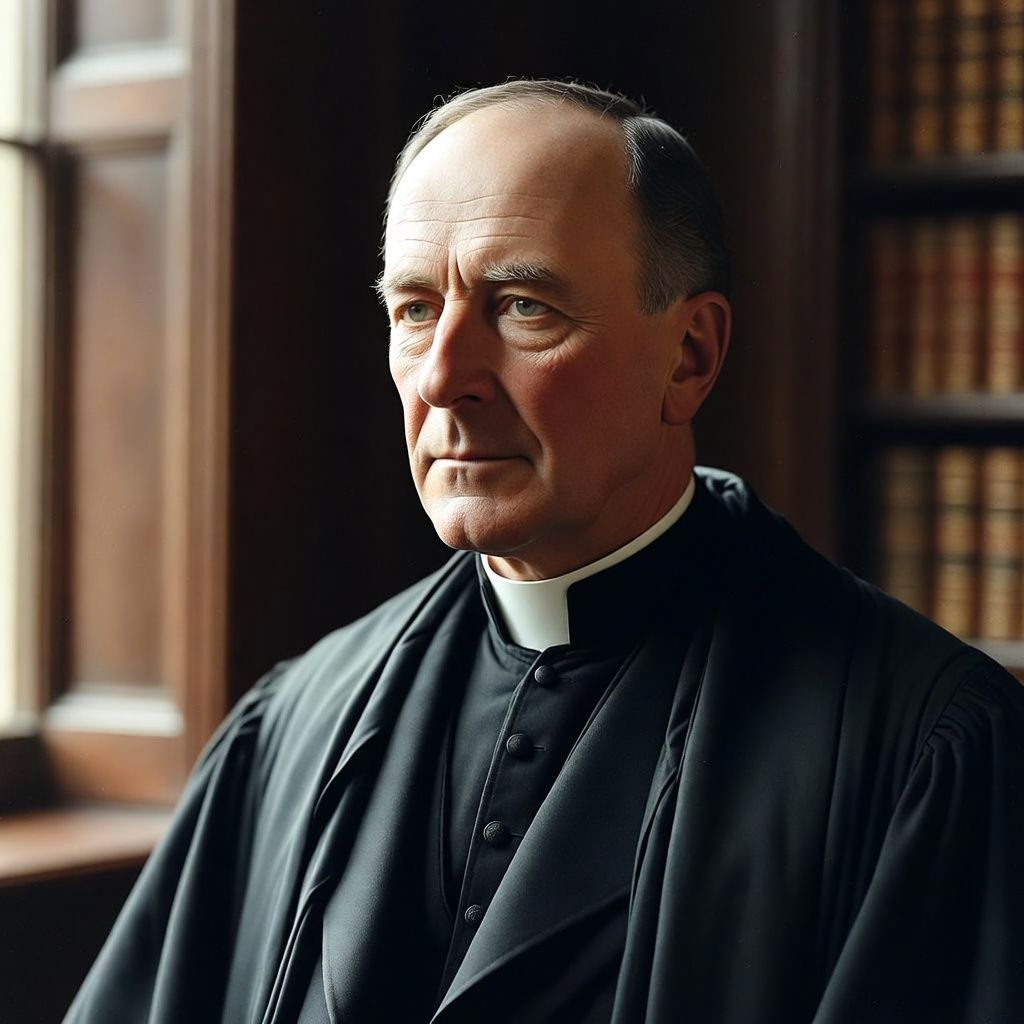
The first precept was never to accept a thing as true until I knew it as such without a single doubt.
About This Quote

This line summarizes the opening rule of René Descartes’ method in his early modern project to rebuild knowledge on secure foundations. In the 1630s, amid religious conflict and the rise of new mathematical physics, Descartes sought a procedure that could yield certainty comparable to geometry. In his autobiographical-philosophical work *Discourse on the Method* (first published in 1637), he describes adopting a “methodical doubt”: suspending assent to any belief that could be doubted, even slightly, in order to discover indubitable starting points for science and philosophy. The precept reflects his broader attempt to replace reliance on authority and tradition with disciplined, self-critical reasoning.
Interpretation
The precept expresses Descartes’ demand that genuine knowledge requires clarity and certainty, not mere plausibility or inherited opinion. By refusing to accept anything as true while any doubt remains, he aims to purge error at the foundations—an intellectual “reset” that makes room for truths that withstand the strongest skeptical challenges. The rule is not simply cynicism; it is a methodological filter designed to identify beliefs that are “clear and distinct” enough to serve as axioms. This stance underwrites Descartes’ later move toward the cogito and his aspiration to ground the sciences on secure first principles, shaping modern epistemology’s focus on justification and certainty.
Source
René Descartes, Discourse on the Method (1637), Part II (first rule of the method: to accept nothing as true unless it is known “clearly and distinctly,” excluding all grounds for doubt).