The future cannot be predicted, but futures can be invented.
About This Quote
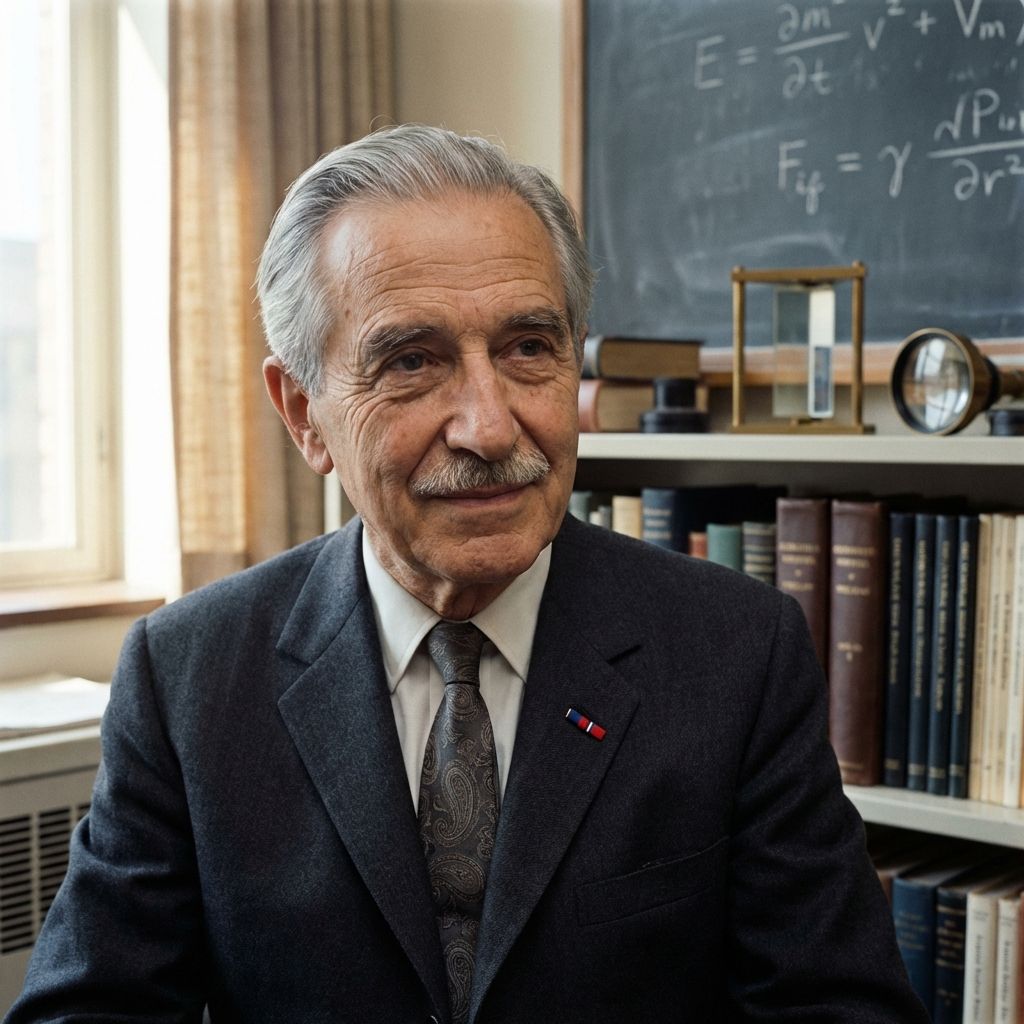
Dennis Gabor (1900–1979), the Hungarian-born British physicist who later won the 1971 Nobel Prize in Physics for inventing holography, often wrote and lectured about the social responsibilities of scientists and engineers. The line is associated with his mid‑20th‑century futurist thinking, when rapid technological change (electronics, automation, nuclear power) made long-range forecasting notoriously unreliable. In that setting, Gabor emphasized that while precise prediction is impossible in complex human-technical systems, deliberate human choices—especially in research, design, and policy—actively shape what comes next. The remark encapsulates his stance that the future is not merely awaited but constructed through invention and collective decision-making.
Interpretation
Gabor contrasts passive forecasting with active creation. “The future cannot be predicted” acknowledges the limits of extrapolation: innovation, political shocks, and unintended consequences routinely break linear forecasts. “But futures can be invented” shifts attention to agency and responsibility: multiple possible futures exist, and technology, institutions, and values help select among them. The plural “futures” implies alternatives rather than inevitability—different designs and priorities yield different outcomes. In a quotations context, the line is often used to argue for proactive innovation (and, implicitly, ethical stewardship): instead of treating the future as fate, we should treat it as a design problem shaped by imagination, experimentation, and choice.