As I was going up the stair
I met a man who wasn’t there.
He wasn’t there again today.
I wish, I wish he’d stay away.
About This Quote
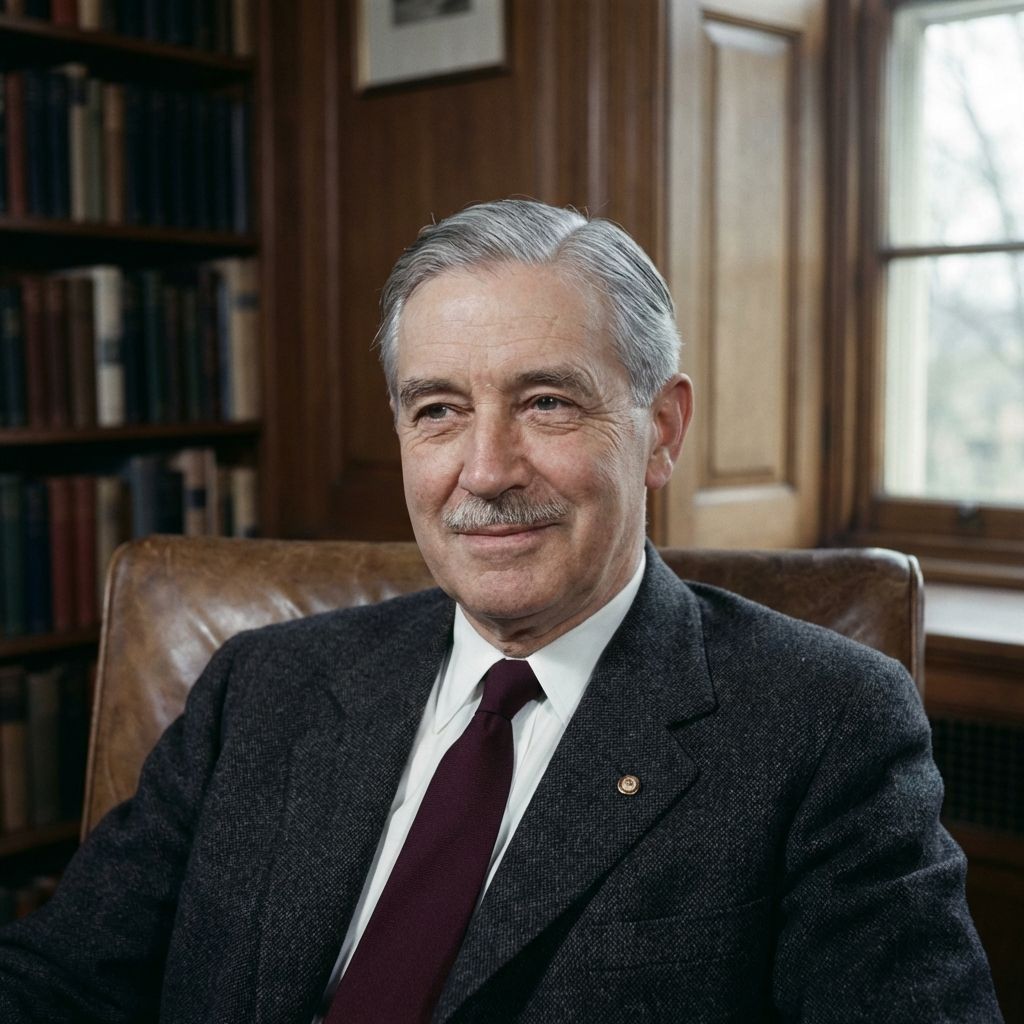
These lines are the best-known stanza from Hughes Mearns’s poem “Antigonish,” a piece of early-20th-century light verse that plays on the idea of encountering an “invisible” person. Mearns (1875–1965), an American writer and educator, published the poem in a magazine context and it later circulated widely in anthologies and popular quotation collections. The poem’s title refers to Antigonish, a town in Nova Scotia, though the setting functions more as a whimsical label than a realistic locale. The stanza is often excerpted on its own because its nursery-rhyme rhythm and paradoxical “man who wasn’t there” premise make it especially memorable.
Interpretation
The stanza turns a simple, sing-song narrative into a compact paradox: the speaker “meets” someone defined by absence. The humor comes from treating nonexistence as a recurring social nuisance—an “invisible” figure who keeps reappearing precisely by not appearing. Read lightly, it is a comic ghost story in miniature; read more psychologically, it evokes the persistence of what cannot be confronted directly: anxiety, obsession, or a thought that returns despite efforts to banish it. The final wish (“he’d stay away”) underscores the frustration of trying to control the mind’s intrusions, giving the rhyme an aftertaste of unease beneath its playful surface.
Variations
1) “As I was going up the stair / I met a man who wasn’t there / He wasn’t there again today / Oh, how I wish he’d go away.”
2) “As I was going up the stair / I met a man who wasn’t there / He wasn’t there again today / I wish, I wish he’d go away.”