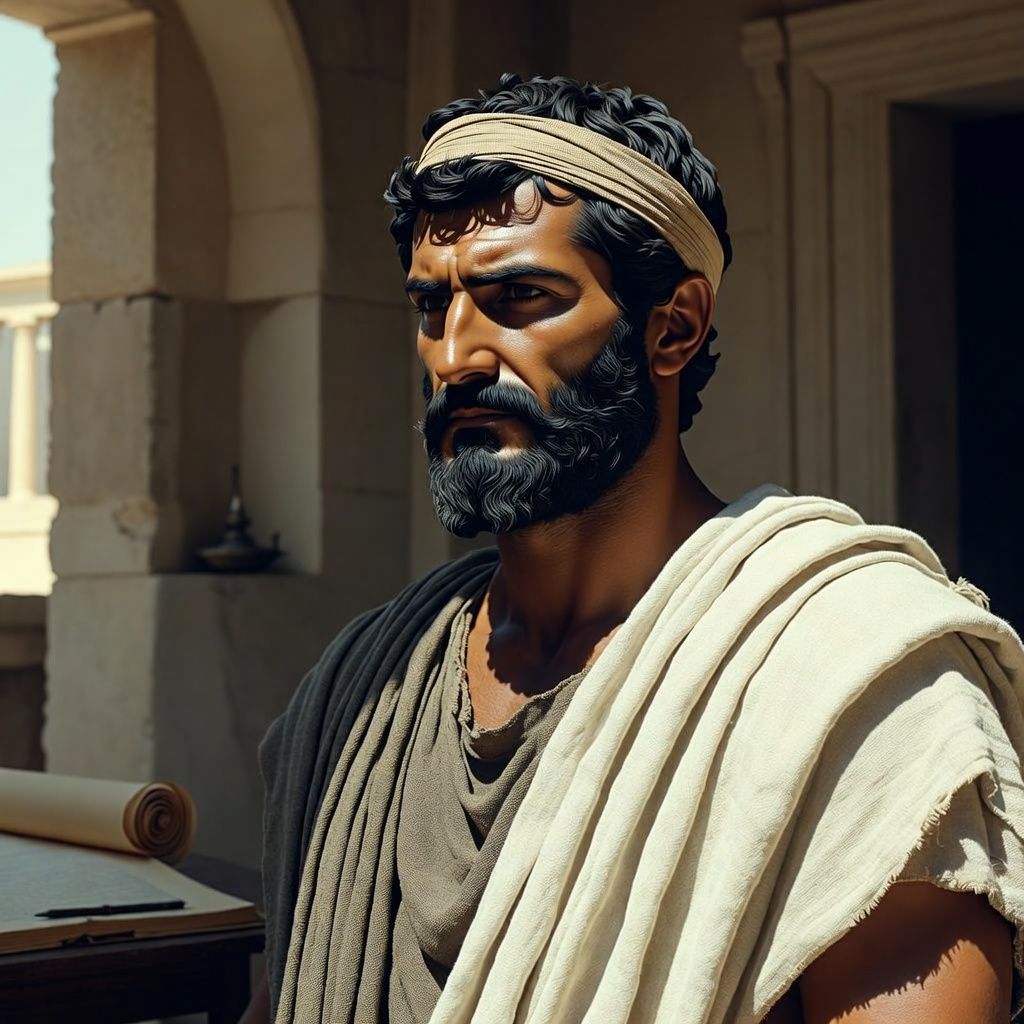
Let a fool hold his tongue and he will pass for a sage.
About This Quote

Publilius Syrus was a 1st‑century BCE writer of Latin mimes whose lines survived largely as sententiae—brief moral maxims excerpted and copied for rhetorical and ethical instruction. This saying belongs to that tradition of practical wisdom prized in Roman education, where self-control in speech was treated as a mark of prudence. The maxim circulated in medieval and Renaissance commonplace books and later entered English through collections of Syrus’s “Sentences,” often used by students and preachers as ready-made exempla about discretion, reputation, and the social power of silence.
Interpretation
The line observes that perceived wisdom is often a matter of restraint rather than knowledge: silence can conceal ignorance and prevent the self-exposure that comes with careless talk. It is both a caution against judging others by outward composure and a counsel of self-discipline—if you cannot speak well, speaking less may protect your standing. The maxim also implies a social critique: communities frequently mistake quietness for depth, rewarding appearances over substance. In that sense it remains a pointed comment on how reputations are made and maintained.
Variations
1) “A fool who holds his tongue may pass for wise.”
2) “Even a fool, when he holds his peace, is counted wise.”
3) “Let a fool keep silent and he will be thought a wise man.”