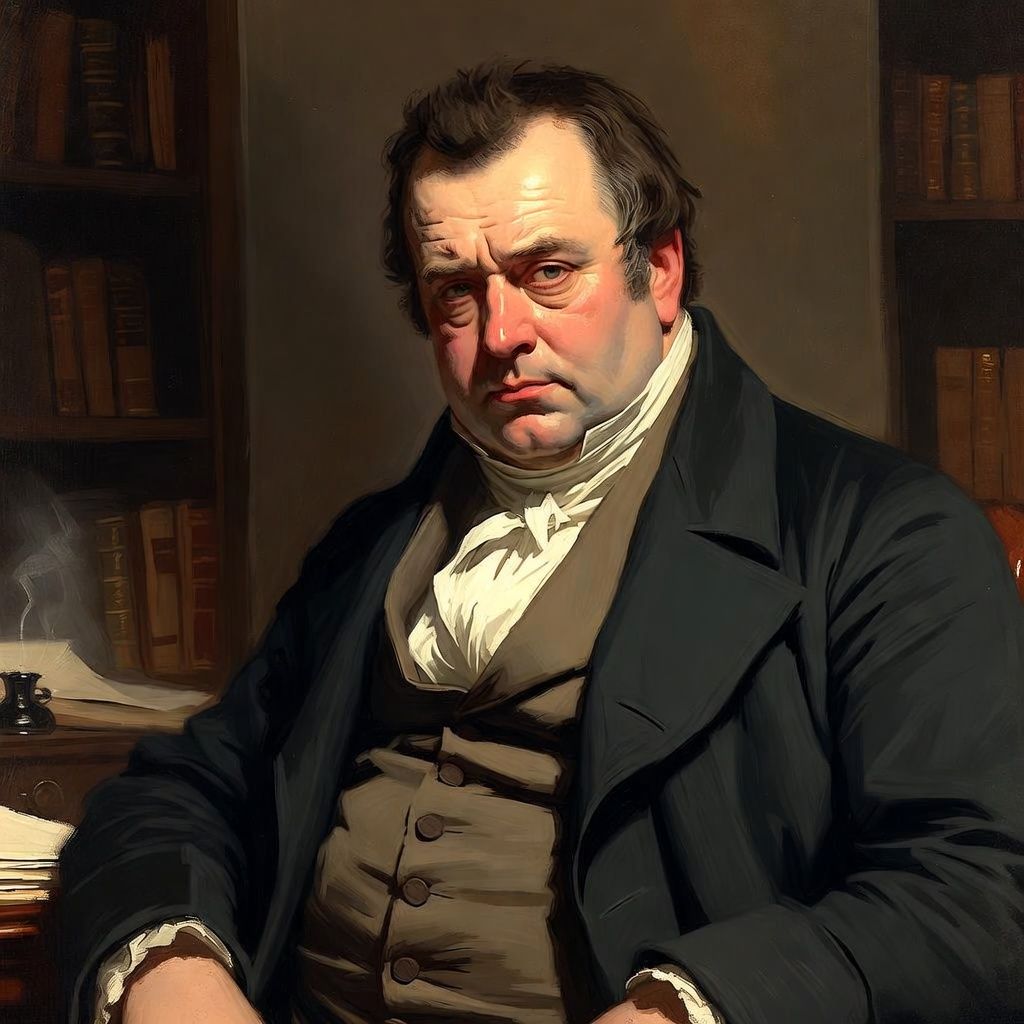
A man who has never looked on Niagara has but a faint idea of a cataract; and he who has not read Barère’s Memoirs may be said not to know what it is to lie.
About This Quote

Macaulay’s line comes from his famous essay on the French Revolutionary politician Bertrand Barère, written as a hostile review of Barère’s self-justifying memoirs. In the early nineteenth century, memoir-literature about the Revolution proliferated, often attempting to rehabilitate reputations tarnished by Terror-era violence and political opportunism. Macaulay, a Whig historian and polemicist with a sharp satirical style, treated Barère as a consummate trimmer and propagandist. The comparison to Niagara—then a byword in English travel writing for overwhelming magnitude—sets up a comic “sublime” of falsehood: Barère’s memoirs are presented as an unsurpassed spectacle of lying.
Interpretation
The sentence is a double-edged simile. Niagara represents the fullest imaginable experience of a “cataract,” so Barère’s memoirs represent the fullest imaginable experience of deceit. Macaulay’s wit depends on transferring the language of awe and grandeur to moral ugliness: the reader is invited to marvel at the sheer scale, variety, and audacity of the untruths. Beyond insult, the remark signals Macaulay’s broader view of certain political memoirs as instruments of reputation-management rather than reliable testimony. It also exemplifies his rhetorical method—turning historical judgment into memorable epigram—so that condemnation becomes as quotable as it is categorical.
Source
Thomas Babington Macaulay, “Barère,” Edinburgh Review (review essay), 1844.