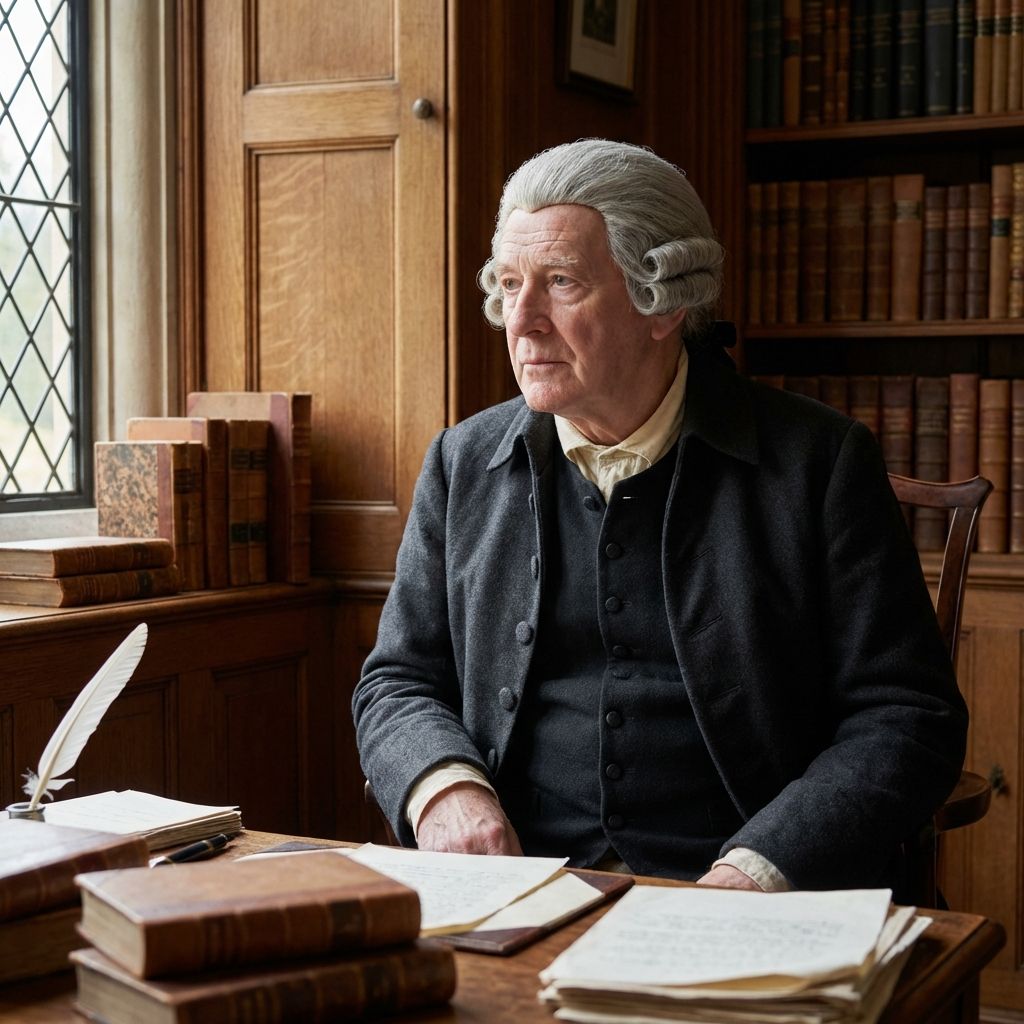
I must study Politicks and War that my sons may have liberty to study Mathematicks and Philosophy. My sons ought to study Mathematicks and Philosophy, Geography, natural History, Naval Architecture, navigation, Commerce and Agriculture, in order to give their Children a right to study Painting, Poetry, Musick, Architecture, Statuary, Tapestry, and Porcelaine.
About This Quote

John Adams wrote this reflection during the American Revolutionary era, when he was deeply engaged in diplomacy and statecraft. In a letter to his wife Abigail Adams from Paris (then a center of Enlightenment learning and the arts), he contrasted the urgent, often harsh necessities of founding and defending a republic—politics, war, and governance—with the more peaceful pursuits he hoped later generations could enjoy. The passage expresses a generational vision: the first generation must secure independence and stable institutions; the next can develop the sciences and practical arts that strengthen a nation; only thereafter can a society fully cultivate the fine arts. It is both personal (as a father) and civic (as a nation-builder).
Interpretation
Adams frames education as a ladder built across generations. The “study” of politics and war is not celebrated for its own sake; it is portrayed as a burdensome prerequisite to secure liberty. Once liberty is established, the next generation can turn to mathematics, philosophy, and the applied sciences—fields that create knowledge, infrastructure, and prosperity. Only with security and material stability can a culture devote itself to painting, poetry, music, and other fine arts. The quote thus links freedom to the conditions that make intellectual and artistic flourishing possible, and it reveals Adams’s Enlightenment belief in progress: civic sacrifice now can yield broader human cultivation later.
Variations
1) “I must study politics and war, that my sons may have liberty to study mathematics and philosophy.”
2) “My sons ought to study mathematics and philosophy… in order to give their children a right to study painting, poetry, music…”
3) Spelling/orthography variants in printings: “Politicks,” “Mathematicks,” “Musick,” “Porcelaine,” and capitalization differences.
Source
John Adams to Abigail Adams, letter from Paris, 12 May 1780 (in The Adams Papers: Adams Family Correspondence).