Nobly, nobly Cape Saint Vincent to the northwest died away;
Sunset ran, one glorious blood-red, reeking into Cadiz Bay.
Sunset ran, one glorious blood-red, reeking into Cadiz Bay.
About This Quote
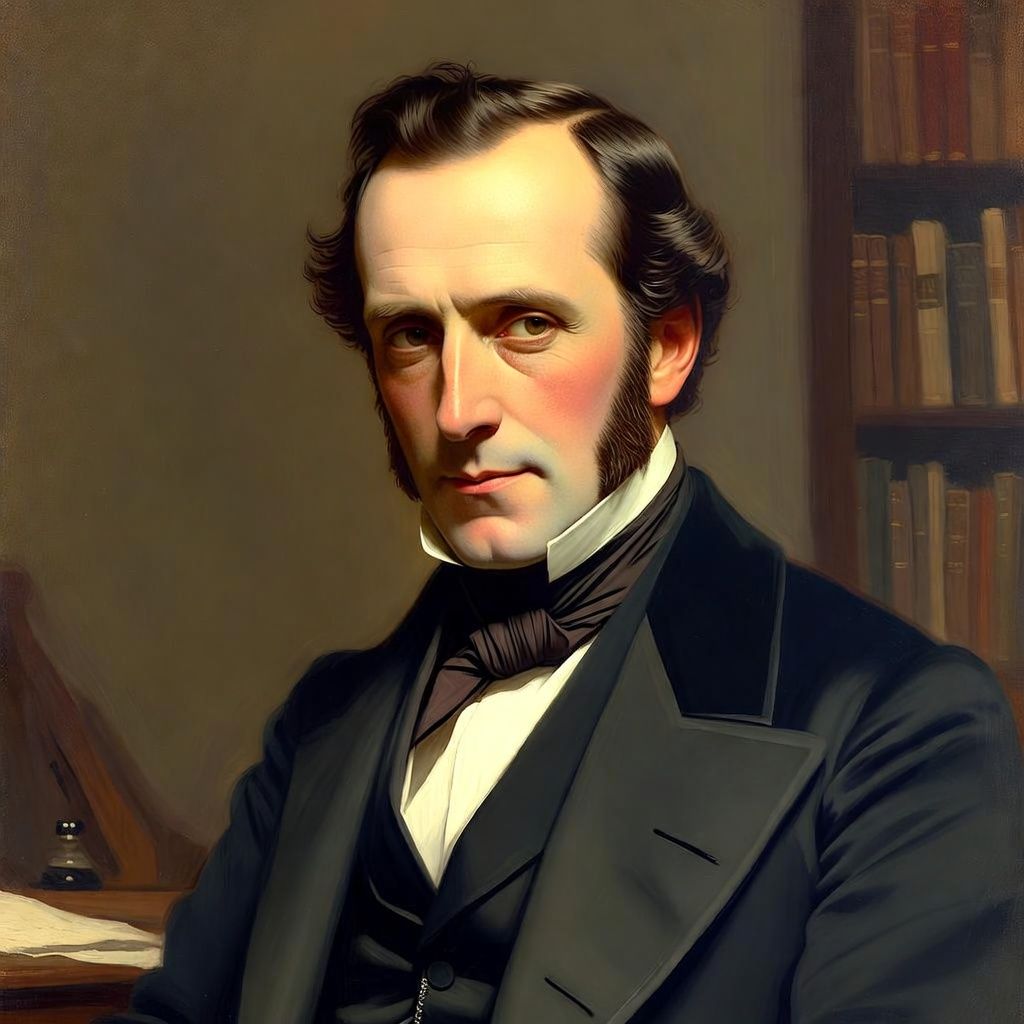
These lines open Robert Browning’s dramatic monologue “The Lost Leader” (1845), written in the wake of William Wordsworth’s perceived political apostasy. Browning, who had admired Wordsworth’s early radical promise, felt that the older poet had abandoned reformist ideals for establishment honors and conservative positions. The poem frames this sense of betrayal as the loss of a once-inspiring guide, using a vivid maritime sunset off the Spanish coast—Cape St. Vincent and Cádiz Bay—as an emblematic scene-setting flourish before the speaker turns to accusation and lament. The seascape’s grandeur and blood-red light heighten the poem’s moral intensity.
Interpretation
The passage uses a grand, almost martial sunset—“blood-red” and “reeking”—to establish a mood of splendor turning to loss. The coastline “died away” as the light drains from it, suggesting not only the day’s end but the fading of ideals. Browning’s diction (“nobly,” “glorious,” then “blood-red”) mixes admiration with foreboding, preparing the reader for a moral reckoning: something once elevated is now compromised. As an opening, it also dramatizes how public betrayal feels to the speaker—large-scale, elemental, and irreversible—before the poem pivots from landscape to accusation and lament.
Source
Robert Browning, “The Lost Leader” (first published 1845).