Nothing great was ever achieved without enthusiasm.
About This Quote
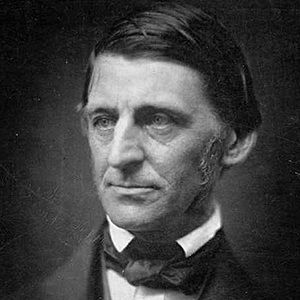
Emerson’s line is commonly traced to his essay “Circles” (1841), written during the most productive phase of his Transcendentalist lecturing and essay-writing. In that period he was arguing against intellectual timidity and social conformity, urging readers to trust the “new” insight that breaks inherited forms. The remark appears as part of his broader insistence that genuine creation—whether in thought, art, reform, or personal character—requires an animating force stronger than mere calculation or decorum. It reflects the ethos of Emerson’s public role as a moral essayist: encouraging self-reliance, inward conviction, and energetic engagement with life rather than passive acceptance.
Interpretation
The statement asserts that major accomplishments—artistic, political, scientific, or personal—require more than talent or opportunity: they demand enthusiasm, understood as spirited commitment and emotional investment. Emerson’s emphasis is not on shallow excitement but on a sustaining inner heat that carries a person through uncertainty, resistance, and failure. The quote also implies a critique of purely instrumental ambition: greatness is not manufactured by technique alone, but by a wholehearted engagement that animates effort and attracts allies. In Emersonian terms, enthusiasm is a sign that one is aligned with a deeper purpose, turning work into an expression of character rather than mere performance.
Source
Ralph Waldo Emerson, “Circles,” in Essays: First Series (1841).