Oh! yet
Stands the church clock at ten to three?
And is there honey still for tea?
Stands the church clock at ten to three?
And is there honey still for tea?
About This Quote
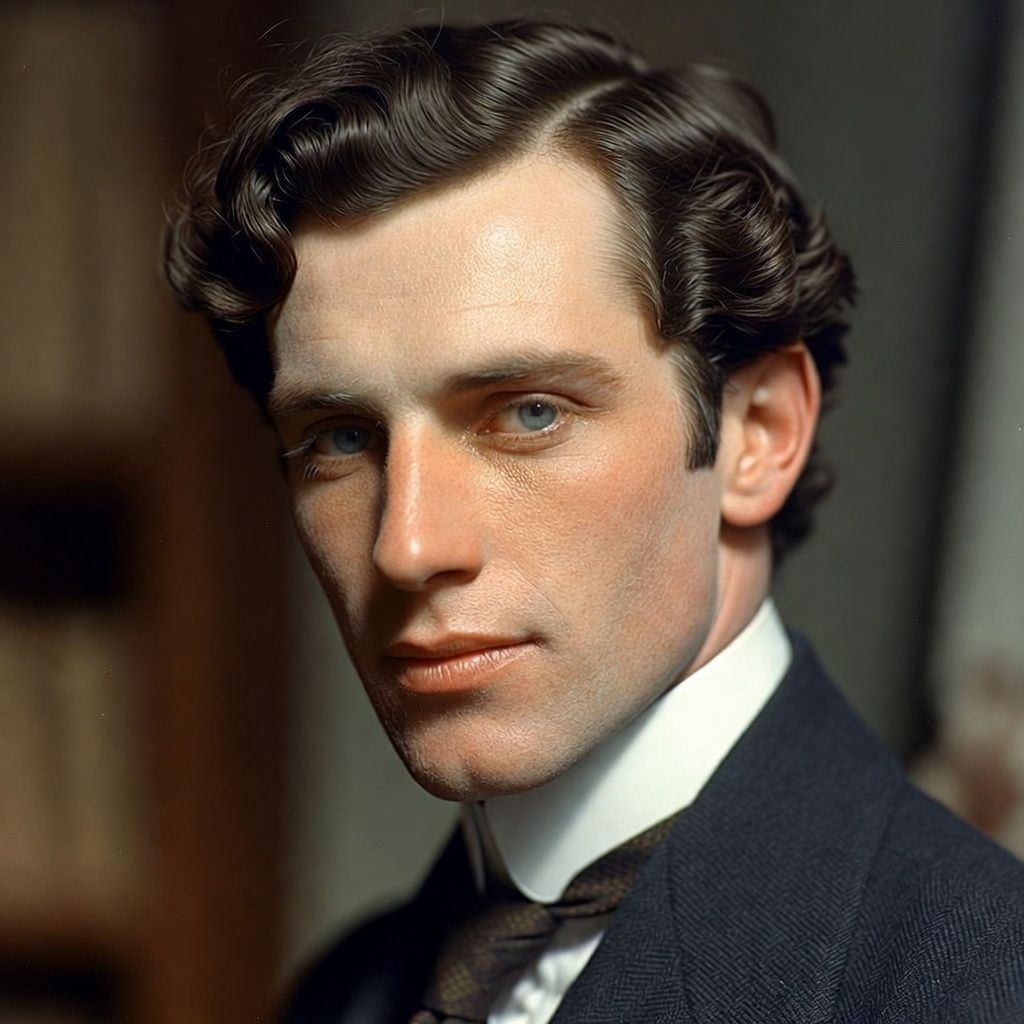
These lines come from Rupert Brooke’s poem “The Old Vicarage, Grantchester,” written in 1912 while he was living abroad (notably in Berlin) and feeling a nostalgic longing for England. The poem contrasts an idealized, pastoral Cambridge-shire village—Grantchester, near Cambridge—with the speaker’s present location on the Continent, which he depicts as spiritually and culturally oppressive. The quoted questions evoke a remembered English afternoon ritual (tea, a familiar church clock), using homely details to summon a sense of stability and belonging. The poem became one of Brooke’s best-known prewar pieces, emblematic of Edwardian nostalgia just before World War I.
Interpretation
The speaker’s exclamatory questions are less requests for information than a yearning check that the beloved world of home still exists unchanged. “Ten to three” suggests a fixed, almost enchanted moment—time in the village seems permanently set at a comforting hour—while “honey still for tea” condenses English domesticity into a single sensory image. The effect is to idealize England as a place of continuity, sweetness, and humane ritual, in contrast to the speaker’s alienation elsewhere. The lines also hint at the fragility of such idylls: the insistence on “still” implies anxiety that modernity, distance, or history might have altered what memory preserves.
Source
Rupert Brooke, “The Old Vicarage, Grantchester” (1912).