If we open a quarrel between the past and the present, we shall find that we have lost the future.
About This Quote
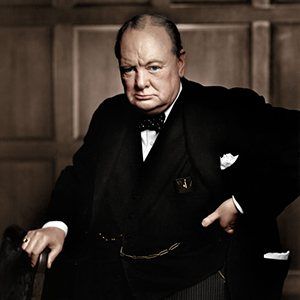
Churchill used this line in the immediate aftermath of World War II, when Britain was debating how to rebuild and how to teach and remember the nation’s past. In a 1948 speech to the House of Commons on education policy, he argued against allowing contemporary political passions to distort historical study or to turn the nation’s heritage into a battleground. The remark reflects his broader postwar concern that social reconstruction and democratic stability required continuity with inherited institutions and a balanced, non-partisan understanding of history—especially after a conflict that had already fractured Europe’s relationship to its past.
Interpretation
The aphorism warns that treating history as an enemy of present needs is self-defeating. If a society frames the past and present as antagonists—either idolizing tradition to block reform or repudiating tradition to justify rupture—it undermines the shared narrative and civic trust needed to plan ahead. Churchill’s “lost the future” suggests that progress depends on continuity: learning from prior experience, preserving what works, and reforming what does not without severing cultural memory. The line is often invoked in debates over education, monuments, and national identity, urging historical understanding as a prerequisite for constructive policy and long-term cohesion.