The openness of rural Nebraska certainly influenced me. That openness, in a way, fosters the imagination. But growing up, Lincoln wasn’t a small town. It was a college town. It had record stores and was a liberal place.
About This Quote
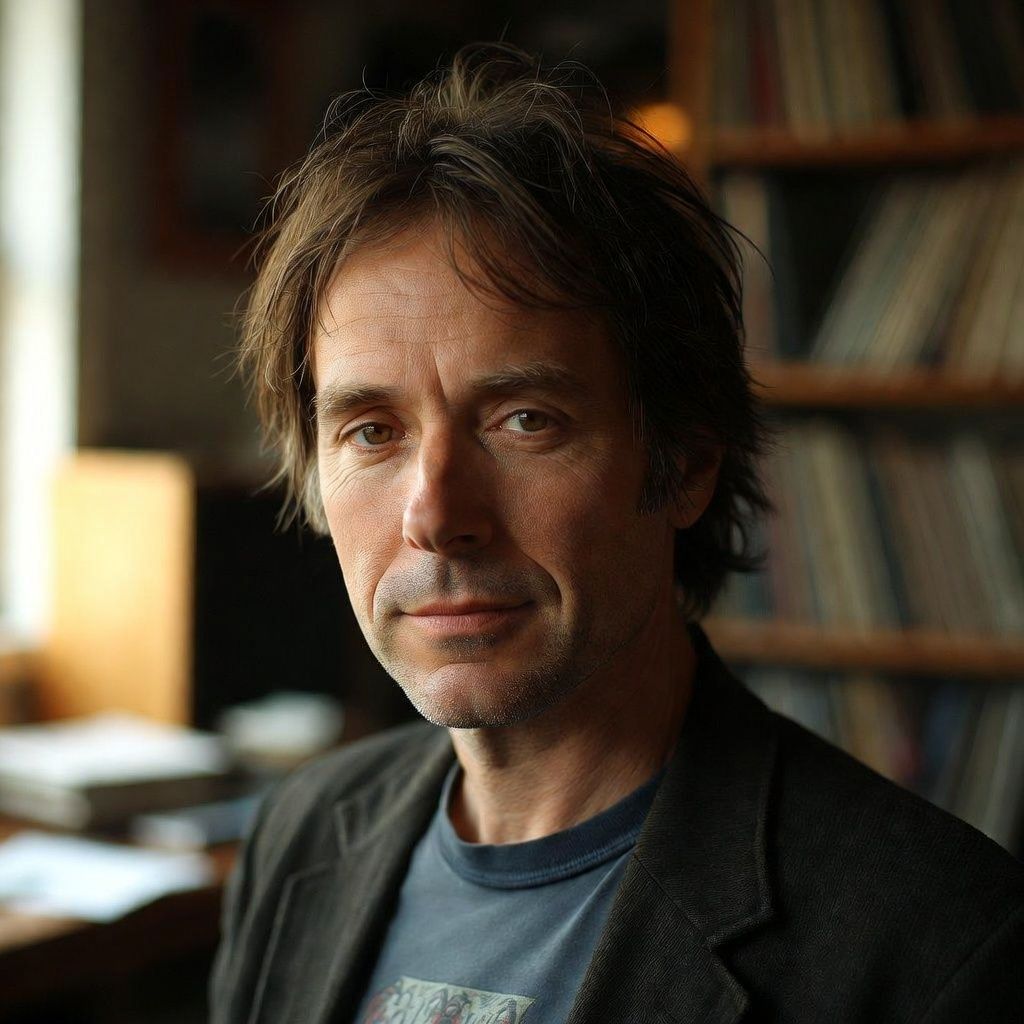
Matthew Sweet (b. 1964), an American singer-songwriter associated with 1990s alternative rock, is reflecting on his upbringing in Nebraska—particularly the contrast between the state’s rural expanses and the cultural life of Lincoln. The remark situates his creative development in a Midwestern environment often stereotyped as isolated: he credits the physical “openness” of the landscape with stimulating imagination, while also emphasizing that Lincoln functioned as a university-centered, comparatively liberal city with access to music culture (e.g., record stores). The quote is framed as autobiographical commentary on place and artistic formation rather than a formal manifesto.
Interpretation
Sweet links creativity to two kinds of “openness.” First is the literal openness of the Great Plains—space, horizon, and a sense of possibility that can prompt inwardness and daydreaming. Second is social and cultural openness: a college town’s circulation of ideas, politics, and art, plus the concrete infrastructure of taste-making (record stores) that can shape a young musician’s ear. The quote pushes back against a simplistic rural/urban divide by arguing that formative artistic environments can be hybrid: expansive landscapes can nurture imagination, while local institutions and subcultures provide the materials—music, community, and permission—to turn imagination into a life in art.