...Stands the Church clock at ten to three?
And is there honey still for tea?
About This Quote
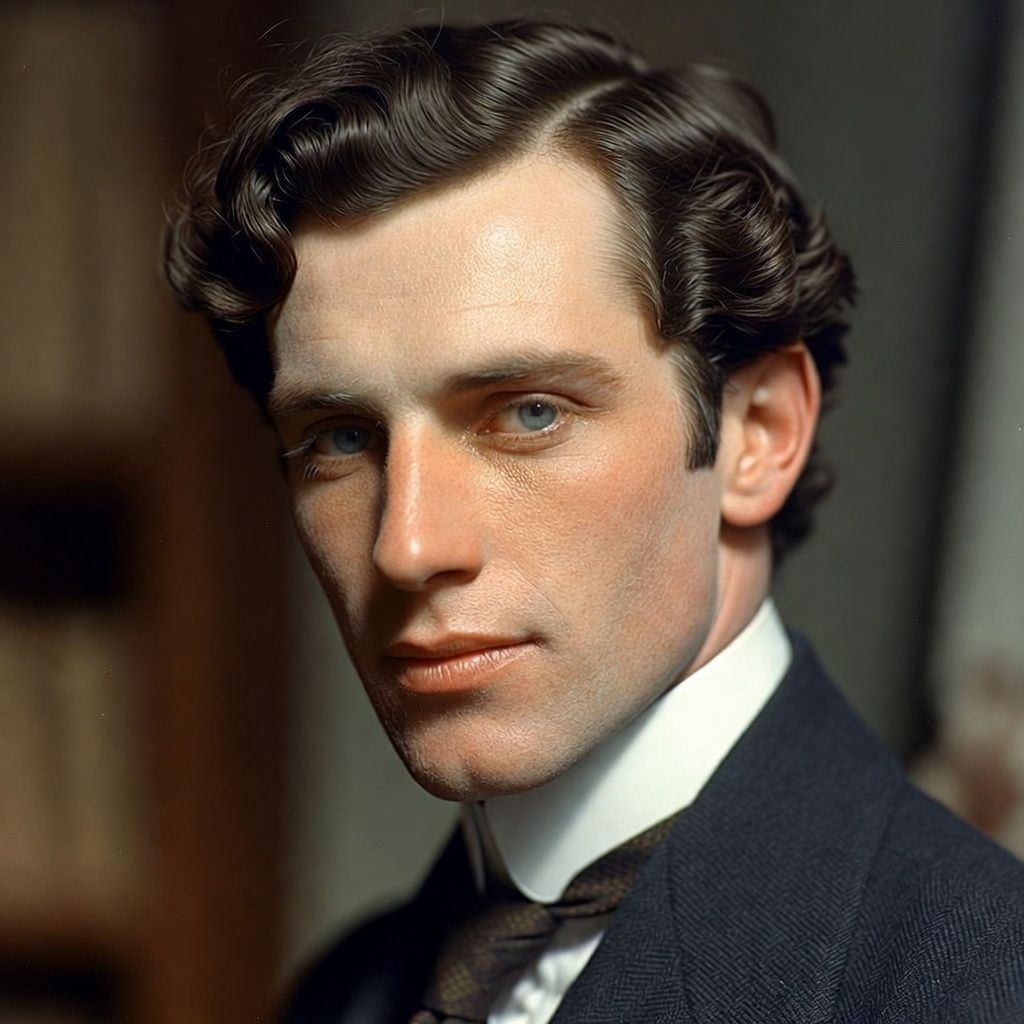
These lines are the closing couplet of Rupert Brooke’s poem “The Old Vicarage, Grantchester,” written in 1912 while Brooke was living abroad (notably in Berlin) and feeling a mixture of homesickness and ironic detachment toward England. The poem evokes the Cambridge village of Grantchester—near Brooke’s student life—through a deliberately idealized, pastoral lens, contrasting it with the perceived ugliness or moral fatigue of continental Europe. The repeated refrain about the church clock and “honey still for tea” crystallizes the poem’s yearning for a stable, comforting English domesticity, even as the poem elsewhere undercuts nostalgia with wit and exaggeration.
Interpretation
The couplet turns on two homely details—an unchanging church clock and the ritual of tea with honey—to symbolize continuity, refuge, and the imagined permanence of “home.” The question form (“Stands…? And is there…?”) conveys distance and uncertainty: the speaker is not there, and the England he longs for may be partly a self-made idyll. Brooke’s tone is both tender and knowingly stylized; the simplicity of the images is the point, suggesting that what is most missed in exile is not grandeur but ordinary rhythms and comforts. As a refrain, it also functions like a spell of return, anchoring the poem’s shifting satire and praise in a single, memorable longing.
Source
Rupert Brooke, “The Old Vicarage, Grantchester” (1912).