Be at War with your Vices, at Peace with your Neighbours, and let every New-Year find you a better Man.
About This Quote
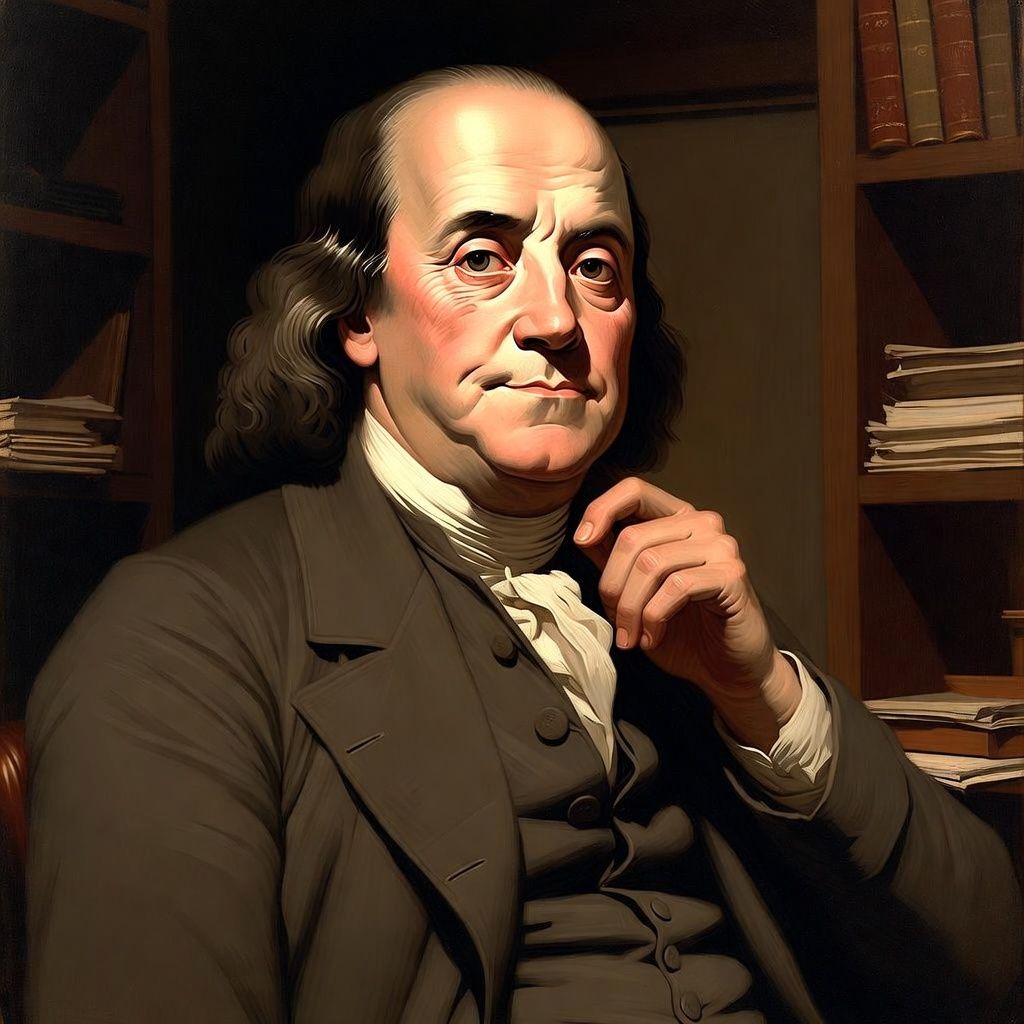
This maxim appears among the aphorisms Benjamin Franklin published under the persona “Poor Richard” in his annual Poor Richard’s Almanack, a hugely popular colonial American publication mixing calendars, weather lore, and moral counsel. By the mid-1750s Franklin was a leading printer and civic figure in Philadelphia, and the Almanack’s pithy sayings promoted the practical virtues he associated with personal improvement and social harmony. The line’s New-Year framing fits the almanac genre (organized around the year’s cycle) and echoes Franklin’s broader interest in self-discipline and moral accounting—encouraging readers to treat the turning of the year as a moment for reform rather than mere festivity.
Interpretation
The sentence balances inward rigor with outward civility. “War with your vices” urges active, ongoing struggle against habitual faults—suggesting that moral improvement requires effort, strategy, and persistence. “Peace with your neighbours” shifts from self to society, implying that a well-lived life is not only privately virtuous but also publicly considerate, avoiding needless quarrels and fostering community stability. The final clause—“let every New-Year find you a better Man”—casts self-betterment as measurable over time, using the annual threshold as a recurring checkpoint. The maxim thus links personal ethics to social order and frames improvement as a lifelong, iterative project.
Variations
1) “Be at war with your vices, at peace with your neighbors, and let every new year find you a better man.”
2) “Be at war with your vices, at peace with your neighbours; and let every new year find you a better man.”
Source
Benjamin Franklin, Poor Richard’s Almanack (Poor Richard Improved), for the year 1755.