A happy New Year! Grant that I
May bring no tear to any eye
When this New Year in time shall end
Let it be said I've played the friend,
Have lived and loved and labored here,
And made of it a happy year.
About This Quote
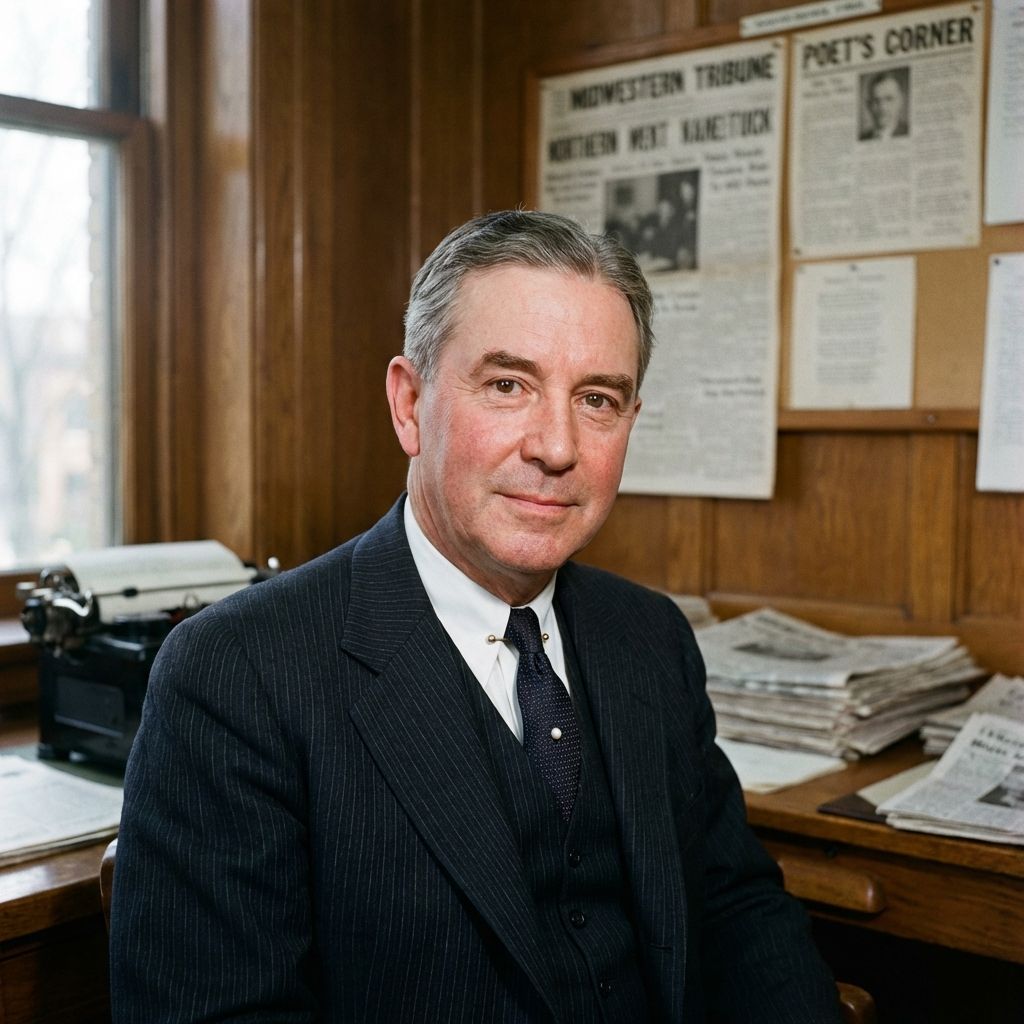
Edgar A. Guest (1881–1959), often called the “People’s Poet,” wrote short, rhymed, morally earnest verse for newspapers and popular magazines in the early 20th century, especially in Detroit. This New Year’s poem reflects the kind of seasonal, civic-minded encouragement that made his work widely reprinted and recited at holidays. Rather than treating New Year as a moment for private resolutions, Guest frames it as a public, ethical accounting—measuring the year by whether one has eased others’ burdens, acted as a friend, and worked with love. Such pieces commonly appeared in year-end or New Year newspaper columns and were circulated as greeting-card verse.
Interpretation
The speaker offers a New Year’s greeting that is also a prayer: the year should be judged not by personal gain but by the emotional and moral impact one has on others. “Bring no tear to any eye” sets a standard of gentleness and restraint, while “played the friend” emphasizes loyalty and everyday kindness. The triad “lived and loved and labored” presents a balanced ideal life—experience, affection, and work—suggesting that happiness is made, not found, through steady, humane action. The closing line implies that a “happy year” is earned through conduct that leaves the world a little better, not merely through fortunate circumstances.