The inherent vice of capitalism is the unequal sharing of blessings; the inherent virtue of socialism is the equal sharing of miseries.
About This Quote
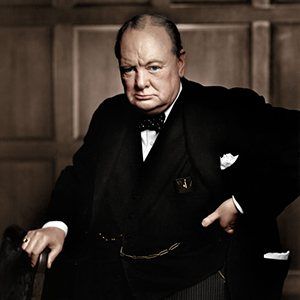
Churchill used this line during the early Cold War as part of a broader critique of socialist and communist economic systems. It is commonly traced to a speech he delivered in the House of Commons while leading the Opposition, when postwar Britain was debating nationalization, welfare-state expansion, and the economic record of Labour’s government. In that setting, Churchill framed capitalism’s moral weakness as producing unequal outcomes, but argued socialism’s promise of equality tended to level living standards downward rather than upward. The remark functions as a pointed antithesis—“blessings” versus “miseries”—aimed at persuading a war-weary electorate that egalitarian planning risked shared scarcity rather than shared prosperity.
Interpretation
Churchill frames capitalism and socialism as systems with opposite moral-economic flaws. Capitalism’s “vice” is not that it produces no prosperity, but that prosperity is distributed unequally—“blessings” exist, but are unevenly shared. Socialism’s “virtue,” in his ironic phrasing, is equality achieved by spreading hardship—“miseries”—rather than raising general well-being. The aphorism compresses a broader argument: that policies aiming at strict economic equality can sacrifice incentives, productivity, and freedom, producing uniform scarcity. It remains influential because it captures, in a single antithesis, a common liberal-conservative critique of egalitarian economic planning.
Source
Winston S. Churchill, speech in the House of Commons (as Leader of the Opposition), 22 October 1945 (commonly cited in quotation references as the origin of this line).