Let me say, with the risk of appearing ridiculous, that the true revolutionary is guided by strong feelings of love. It is impossible to think of an authentic revolutionary without this quality.
About This Quote
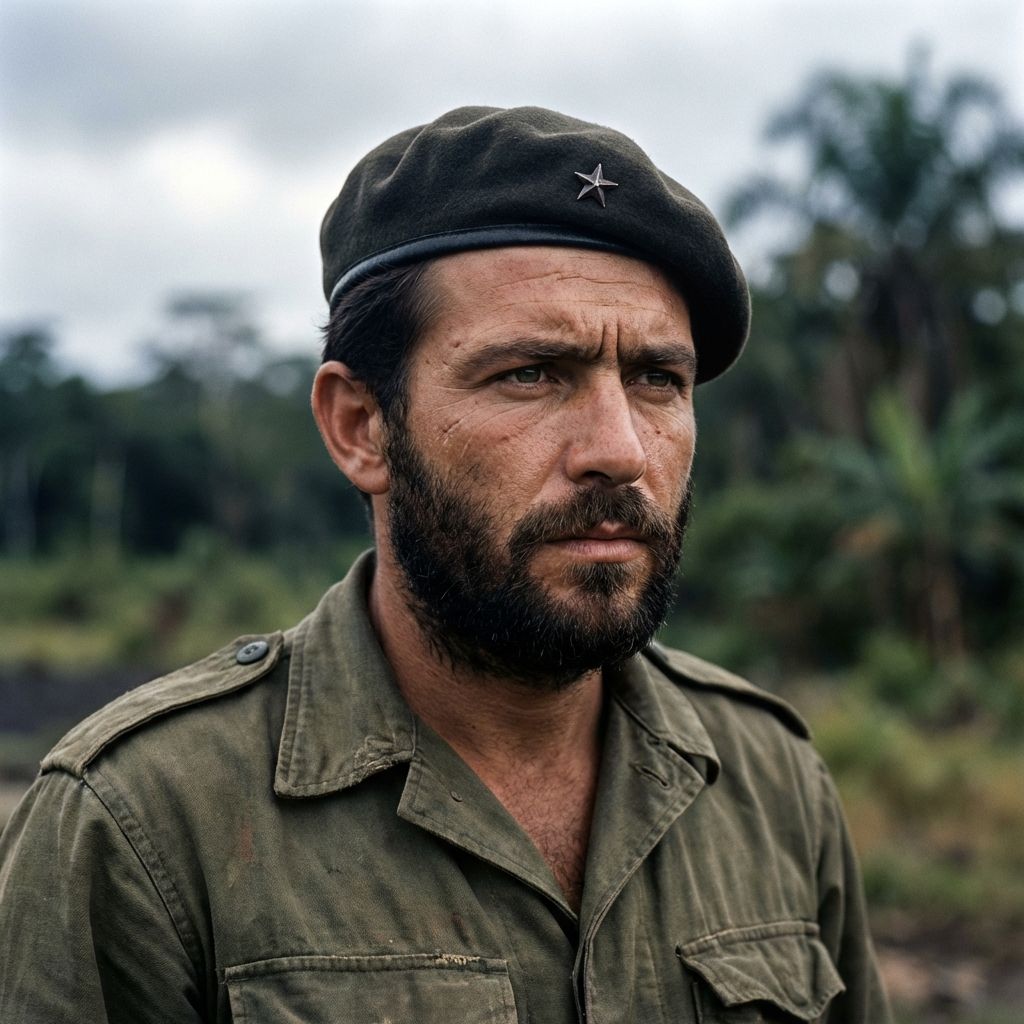
Guevara wrote this line in the mid-1960s while reflecting on the moral psychology of revolutionary struggle and the formation of the “new man” in socialist society. By this point he was an internationally known figure of the Cuban Revolution and a senior official in the Cuban government, but he was also increasingly preoccupied with the ethical demands of armed struggle and the dangers of bureaucratic or self-interested politics. The remark appears in an essay framed as guidance to militants and sympathizers, insisting that revolutionary discipline and hardness must be rooted in a humanistic commitment to others rather than hatred or personal ambition.
Interpretation
The statement argues that genuine revolutionary action is not driven primarily by resentment, vengeance, or abstract ideology, but by an expansive love—solidarity with the oppressed and a willingness to sacrifice for collective liberation. Guevara acknowledges that calling revolution “love” may sound sentimental or “ridiculous,” because revolution often entails violence and severity; yet he insists that without this ethical core, revolutionary practice becomes hollow, cruel, or merely power-seeking. The quote thus links political legitimacy to moral motivation: the “authentic revolutionary” is defined as much by inner character and empathy as by strategy or doctrine.
Variations
1) “At the risk of seeming ridiculous, let me say that the true revolutionary is guided by great feelings of love.”
2) “Let me say, at the risk of appearing ridiculous, that the true revolutionary is guided by a great feeling of love.”
3) “It is impossible to think of a genuine revolutionary lacking this quality.”
Source
Ernesto “Che” Guevara, “Socialism and Man in Cuba” (Spanish: “El socialismo y el hombre en Cuba”), 1965.