This noble ensample to his sheep he yaf,
That first he wroghte, and afterward he taughte.
That first he wroghte, and afterward he taughte.
About This Quote

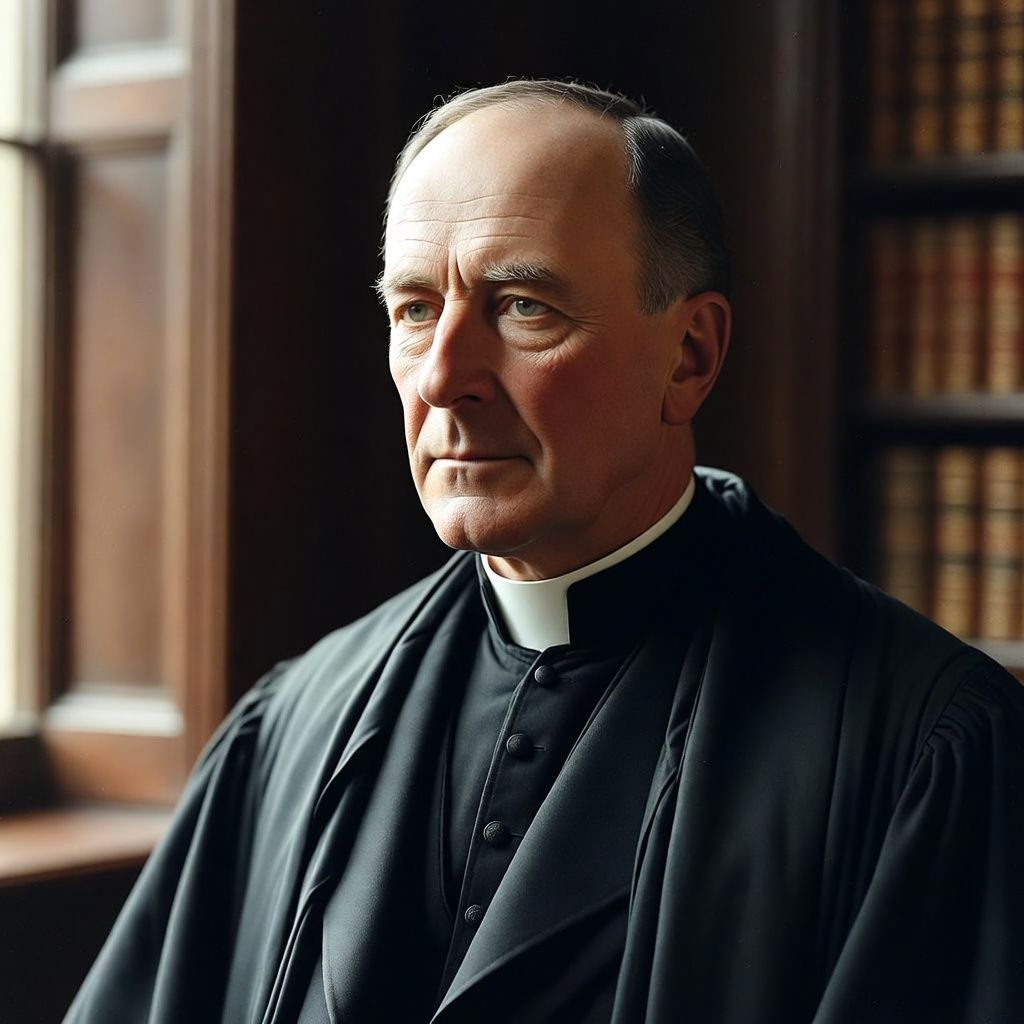
These lines occur in Chaucer’s portrait of the Parson in the “General Prologue” to *The Canterbury Tales* (late 14th century). In contrast to many ecclesiastical figures Chaucer satirizes elsewhere in the Prologue, the Parson is presented as a model parish priest: learned, patient, and genuinely devoted to the spiritual welfare of his “parishens.” The couplet emphasizes pastoral integrity—he leads his flock by personal example rather than mere preaching. The Middle English diction (“ensample,” “yaf,” “wroghte,” “taughte”) underscores the poem’s period and Chaucer’s concern with the gap between clerical ideals and clerical practice in his own society.
Interpretation
The couplet crystallizes an ethical principle: true moral authority comes from lived practice. The Parson “gave” his sheep (his parishioners) a “noble example” because he acted rightly first and only then taught others—an implicit rebuke to hypocrisy and empty sermonizing. Chaucer frames effective spiritual leadership as imitative: the flock learns virtue by seeing it embodied. Beyond its religious setting, the lines have had a long afterlife as a general maxim about leadership and pedagogy—credibility is earned through conduct. The order of verbs (“wroghte… afterward… taughte”) makes the priority unmistakable: action grounds instruction.
Source
Geoffrey Chaucer, *The Canterbury Tales*, “General Prologue,” in the description of the Parson (Middle English lines: “This noble ensample to his sheep he yaf, / That first he wroghte, and afterward he taughte.”).