The pride of the peacock is the glory of God.
The lust of the goat is the bounty of God.
The wrath of the lion is the wisdom of God.
The nakedness of woman is the work of God.
The lust of the goat is the bounty of God.
The wrath of the lion is the wisdom of God.
The nakedness of woman is the work of God.
About This Quote
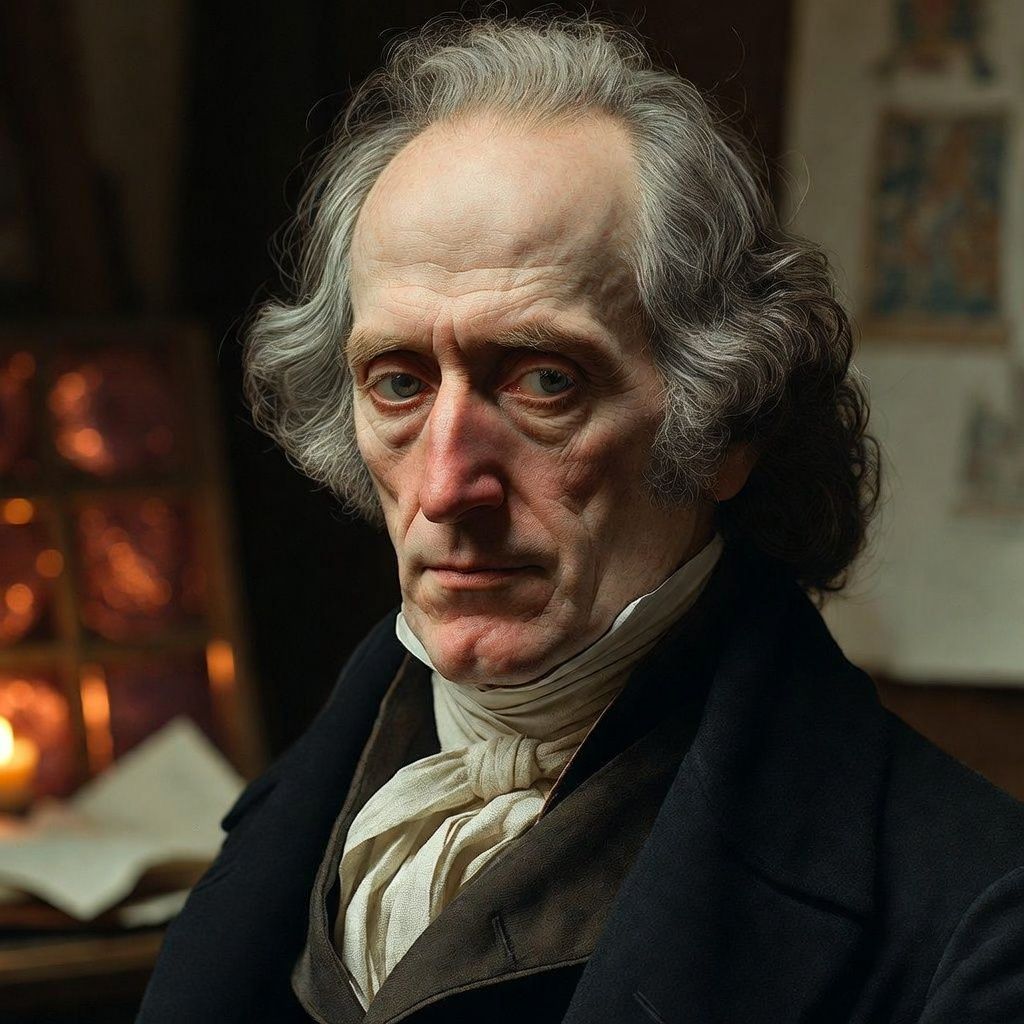
These lines come from William Blake’s “Proverbs of Hell,” a section of his illuminated book The Marriage of Heaven and Hell (composed c. 1790–1793). In this work Blake attacks conventional moral dualisms—especially the religious tendency to label bodily desire, animal energy, and passionate emotion as “evil.” Writing in the wake of the American and French Revolutions, Blake frames “Hell” not as mere depravity but as the realm of vital energy and creative force. The “proverbs” mimic biblical wisdom literature while subverting it, presenting natural impulses (pride, lust, wrath, sexuality) as expressions of the divine rather than stains upon it.
Interpretation
Blake provocatively identifies traits typically condemned as sinful—vanity, sexual appetite, anger, nakedness—with aspects of God’s own “glory,” “bounty,” “wisdom,” and “work.” The point is not simple endorsement of vice, but a revaluation of the natural and the embodied: what moralists call corruption may be, in Blake’s vision, the necessary energy of life and creation. By pairing each animal or human attribute with a divine quality, he collapses the boundary between sacred and profane and challenges ascetic Christianity’s suspicion of the senses. The aphorisms insist that the divine is encountered in nature’s exuberance and in human desire, not only in restraint.
Source
William Blake, The Marriage of Heaven and Hell, “Proverbs of Hell” (composed c. 1790–1793).