The rich man in his castle,
The poor man at his gate,
God made them, high or lowly,
And order'd their estate.
About This Quote
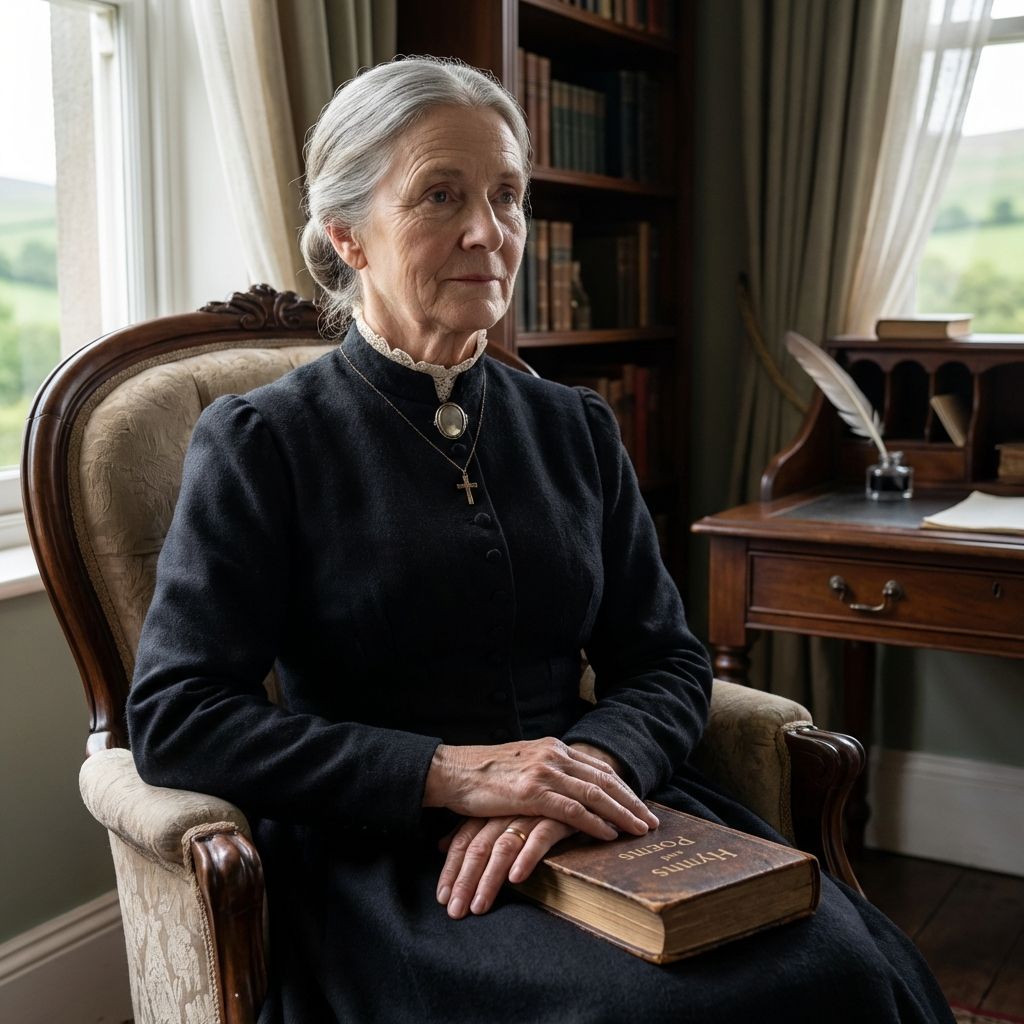
These lines come from Cecil Frances Alexander’s Anglican hymn “All Things Bright and Beautiful,” written for children as part of her project of pairing hymns with the Church Catechism. The hymn was first published in her collection Hymns for Little Children (Dublin, 1848). In Victorian Britain and Ireland, such catechetical verse often reinforced prevailing social hierarchies as part of a religious and moral education. The stanza contrasting “rich” and “poor” later became controversial—frequently omitted in modern hymnals—because it appears to sacralize class divisions as divinely appointed rather than socially contingent.
Interpretation
The stanza frames social inequality in a providential register: wealth and poverty are presented as part of an “order” established by God. Read sympathetically, it can be taken as urging humility and acceptance of one’s station, a common Victorian moral theme aimed at cultivating gratitude and social stability. Read critically, it functions as theological legitimation of class stratification, implying that existing economic arrangements are naturalized and therefore not to be challenged. The later discomfort with the verse reflects changing ethical and theological sensibilities about justice, agency, and the human responsibility to reform inequitable social structures.
Source
Cecil Frances Alexander, “All Things Bright and Beautiful,” in Hymns for Little Children (Dublin: published 1848).