
We shape our buildings, and afterwards our buildings shape us.
About This Quote
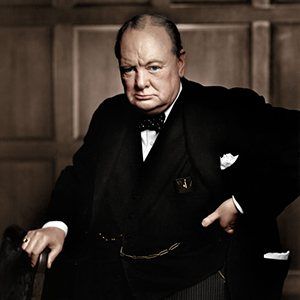
Churchill made this remark during debates over how to rebuild the House of Commons after it was destroyed in the Blitz. In 1943, as plans were being considered for a redesigned chamber, he argued strongly that the Commons should be reconstructed on its traditional, relatively small, rectangular plan rather than as a large semicircular auditorium. His point was that the physical arrangement of the chamber—its size, intimacy, and adversarial two-sides layout—helped preserve the character of British parliamentary debate and party government. The line is often cited as a classic statement of how built environments influence social and political behavior.
Interpretation
The aphorism captures a reciprocal relationship between human intention and material form. People design buildings to serve needs and embody values—efficiency, hierarchy, openness, tradition—but once constructed, those spaces begin to condition how people move, meet, speak, and even think. Churchill’s parliamentary application suggests that architecture is not neutral: a chamber’s geometry can encourage confrontation or consensus, intimacy or spectacle, accountability or distance. More broadly, the quote anticipates modern ideas in environmental psychology and urban studies: the built world becomes a quiet educator, reinforcing habits and institutions long after the original designers are gone.
Variations
1) “We shape our buildings; thereafter they shape us.”
2) “First we shape our buildings and then our buildings shape us.”
3) “We shape our dwellings, and afterwards our dwellings shape us.”
Source
Winston S. Churchill, speech in the House of Commons on the rebuilding of the Commons Chamber (debate on the House of Commons (Rebuilding)), 28 October 1943 (reported in Parliamentary Debates (Hansard), House of Commons).


